6. The Kerr family: age as a factor in refugee experience
Bedford Way (previously Upper Bedford Place).
Today, this road is dominated by University of London institutes and schools, especially the Institute of Education building. In the 1930s and 1940s, though, it was full of cheap hotels and boarding houses, where refugees sought accomodation.
There were so many refugees living in Bloomsbury, in streets like this one, that in 1942 the Metropolitan Borough of St Pancras even produced a letter to all households in German, with Czech on the reverse, exhorting inhabitants to save their waste and recycle scrap for the war effort.
The Kerr Family at the Hotel Foyer Swiss
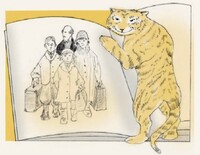
Down this road lived the Kerr family, at the Hotel Foyer Swiss, from 1935 when they arrived in London until 1940, when the hotel was bombed. The Kerr family – Alfred Kerr, a famous theatre critic, Julia Kerr, composer, and their children Judith and Michael. A friend described a visit the hotel:
Judith Kerr described the inhabitants of the hotel in an interview in 2001:
The Kerr family members' experiences illustrate how the old and young, generally speaking, experienced exile differently. By the time the family came to Britain, Alfred Kerr was almost seventy. He had lost his audience and his language. As in many families it was the women who were more adaptable. Julia Kerr, who spoke good English, got a job as a secretary to provide for the family. Judith and her brother, 12 and 14 respectively, learnt English quickly and were both very successful in their chosen careers. Judith Kerr remembered it as an opportunity – describing it as ‘The best thing that ever happened to me’. And language became a barrier between the generations as Judith did not always have the German vocabulary for the things she learnt in English, so could not communicate about them with her father.
In Germany Alfred Kerr had been very successful and well-known. In London he was a co-founder of the Free German Culture League (FDKB) and worked for the German PEN Club, the but he never achieved any kind of success in Britain, and more importantly, barely earned any money. His biggest mark of fame in this country was that it was descovered after the war that he was listed in the so-called 'Nazi Black Book'. The Sonderfahndungsliste G.B. was a secret list of prominent residents to be arrested, produced in 1940 by the SS in preparation for the invasion of Britain. 2,800 names of British nationals and European exiles were listed, including Virginia Woolf and her husband, E.M. Forster, as well as Stefan Zweig and Chaim Weizmann. When it was discovered in 1945 and publicised in the press it quickly became a badge of honour to have been included.
We walk south towards Russell Square, pausing to notice University of London's Refugee Law Project. We turn right and re-enter Senate House. Follow the walk