-
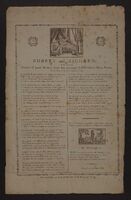 Robert and Richard; or, The Ghost of Poor Molly, Who Was Drowned in Richard's Mill Pond : To the Tune of Collins's Mulberry Tree.
 The Cheap Repository Tracts were a series of inexpensive religious, moral, and political publications—including tracts, ballads, and chapbooks—created by the writer and educator Hannah More. Aimed at the literate poor, they were produced in response to the radical and revolutionary literature circulating in England after the French Revolution, as well as to the rise of “immoral and vulgar” popular fiction. Robert and Richard is a cautionary ballad that warns of the dangers of sin.
-
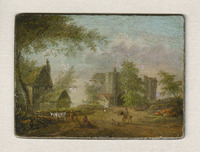 S. West’s Sale Warehouse, For Unredeem’d Pledges, Corner of Fann’s
 This object has two sides—and two uses. It was originally a engraved copper printing plate for the trade cards for an emporium selling unredeemed pawnshop goods. This use, producing ephemeral business cards, dates to around 1800. Around 1810, the valuable copper found a new purpose as the support for a miniature oil painting of a bucolic landscape complete with a thatched farmhouse, overgrown ruins, and cattle in the foreground.
-
 Silk Suffragette Buttonhole
 This silk Suffragette buttonhole, made around 1914, was designed to be worn in public as a sign of support for women’s voting rights. Small but striking, it turned clothing into a political statement. Like many suffrage objects, it combined elegance with activism, making protest visible in everyday life.
-
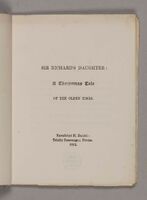 Sir Richard's Daughter: A Christmas Tale of the Olden Times
 During the 19th century, printing presses entered the middle-class home, creating a boom in ‘parlour printing’. This is exemplified by the works of CHO Daniel, who was most famous for the works he printed in Oxford. This 1852 pamphlet is from Daniel’s earlier printing phase, based at his family home in Frome. Presented in a simple blue cover wrapper, the text is anonymous although likely to have been written by Wilson Clement Cruttwell.
-
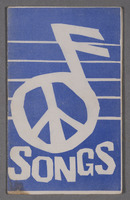 Songs
Songs This collection, published by folk singer and collector John Foreman—known as “The Broadsheet King”—brings together protest songs, traditional ballads, and spirituals. Reflecting grassroots musical activism, it illustrates how song circulated as a powerful tool of commentary, solidarity, and resistance in twentieth-century Britain.
-
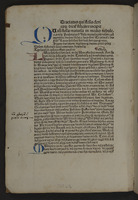 Stella Clericorum Cuilibet Clerico Summe Necessaria
 A popular treatise of the late middle-ages, 'Stella Clericorum' (star of the clerics) was written around 1200 and expounded on the dignity of the priesthood. It survives in 450 manuscript copies and at least 80 printed editions from the 15th and 16th centuries, often featuring illustrated titlepages. This edition from around 1489 was printed in Cologne and is 18 pages long. Large initials have been added to the printed text by hand in red and blue and marginal annotations and underlining throughout the text show how the pamphlet was used by its early readers. It ends with a short laudatory poem, 'In Laudem Libelli'- In Praise of the Book.
-
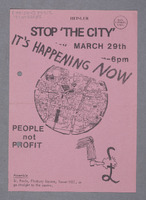 Stop the City
 This flyer publicised the Stop the City protest in March 1984, a grassroots demonstration against capitalism and financial institutions in London. Featuring illustrations and a map, it symbolises direct action challenging the economic and political power of the City.
-
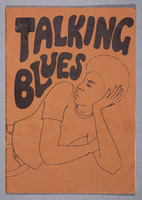 Talking Blues
 Centerprise was founded in Hackney in 1971 by Glenn Thompson and Margaret Gosley. It was a bookshop and publishing project, but also included a coffee bar, adult education, and various youth groups. This pamphlet is a poetry anthology written by young people who met weekly at Centerprise, supported by youth worker Oliver Flavin, with illustrations by Doffy Weir. The young poets, including Hugh Boatswain and Sandra Agard, describe their lives in verse, focussing on education, racism and unemployment, but also the power of music.
-
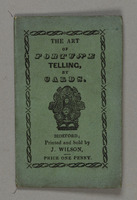 The Art of Fortune Telling, by Cards
 A chapbook on fortune telling printed in Bideford, Devon, around 1840. It has eye‑catching blue paper covers, with the title on the front and an image of Mother Shipton, a fortune‑teller popular in folklore, on the back. Inside, it describes the prophetic meanings of cards in a standard deck, from the ace of clubs promising wealth and prosperity to the deuce of spades signifying a coffin. The chapbook reflects the period’s fascination with prophecies and fortune‑telling, and with learning to practise them oneself.
-
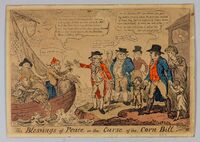 The Blessings of Peace or, The Curse of the Corn Bill
 George Cruikshank was one of the leading caricaturists and illustrators of the 19th century. Early in his career he produced prolific work on satirical prints, pamphlets, and broadsheets. A particularly fruitful collaboration was with the writer, satirist, and free‑press campaigner William Hone on a series of sharply political pamphlets. Cruikshank’s work skewered the state of politics and society in the turbulent Georgian age.
This print targets the first of the Corn Laws, passed in 1815 to restrict the importation of foreign grain after the end of the Napoleonic Wars. The legislation raised the cost of living for the poorest classes, provoking riots and fierce public opposition.
-
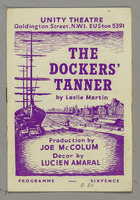 The Dockers' Tanner
 This theatre programme advertises 'The Dockers’ Tanner', a play by Leslie Martin staged at London’s Unity Theatre in the mid-1950s. Produced by Joe McColum with décor by Lucien Amaral, the play dramatises the 1889 London Dock Strike, when workers united to demand the “dockers’ tanner” (a minimum wage of sixpence an hour). Unity Theatre, known for its left-wing productions, used drama to highlight labour struggles and working-class history. At just six pages, the programme provides cast lists and production details, while also embodying the theatre’s broader mission - to make radical politics accessible through performance, solidarity, and cultural engagement.
-
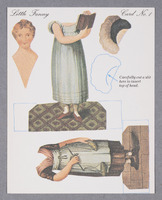 The History of Little Fanny : Exemplified in a Series of Figures.
 This pamphlet with printed paper‑doll cards is a facsimile of the first commercially produced paper‑doll kit. Paper crafts used to make toys and other novelties have existed for thousands of years, but printing made it possible to produce and distribute them commercially, and produced a growing market of toys and books for children. This facsimile was published by bibliographer Robin Alston’s Scolar Press, which produced low‑cost editions of important English works that were often scarce and survived in small numbers.
-
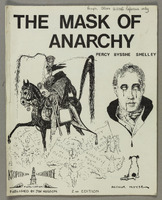 The Mask of Anarchy
 This 1973 edition of Percy Bysshe Shelley’s radical poem 'The Mask of Anarchy' was published by Kropotkin’s Lighthouse Publications, with a foreword by poet Dennis Gould. Written in 1819 in response to the Peterloo Massacre, Shelley’s call for nonviolent resistance became one of the most influential protest poems in English literature. Reissued during the 1970s, amid renewed interest in political poetry and grassroots publishing, this slim pamphlet links Romantic radicalism with contemporary struggles. Its production by a small press underscores the enduring power of Shelley’s words to inspire movements for justice, solidarity, and social change across generations.
-
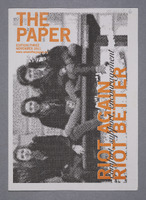 The Paper, November 2011. Edition 3: Riot Again, Riot Better
 Produced in response to the 2011 London riots, this folded pamphlet adopts the raw aesthetics of zine culture. Mixing radical commentary with striking design, it was made to be circulated, handled, and debated, embodying grassroots political communication.
-
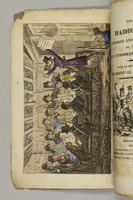 The Radicals Unmasked and Outwitted; or, The Thistle Uprooted in Cato-field / With an Engraving of the Radical Parliament.
 An anti‑radical poem, published in 1820, celebrating the discovery and arrest of a group of revolutionary radicals. In February of that year, the group plotted to assassinate Prime Minister Lord Liverpool and his cabinet as a first step toward overthrowing the government. The conspirators had been involved in earlier riots and were motivated by outrage over the Peterloo Massacre and the repressive Six Acts—legislation aimed at quelling dissent through measures such as banning “seditious” meetings and taxing pamphlets to restrict radical ideas. The pamphlet attacks prominent radical politicians and activists, and warns against the conspirators’ violent aims. Its coloured frontispiece by George Cruikshank vividly depicts the conspirators preparing for revolution.
-
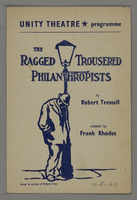 The Ragged Trousered Philanthropists
 This programme, issued by the Unity Theatre around 1949, announces a stage adaptation of Robert Tressell’s landmark novel 'The Ragged Trousered Philanthropists' by Frank Rhodes. The novel, first published in 1914, vividly depicts the struggles of working-class painters and decorators, exposing exploitation and inequality in Edwardian England. By staging it, Unity Theatre brought Tressell’s socialist message to contemporary audiences in post-war Britain. The modest three-page programme not only records cast and production details but also reflects the theatre’s enduring mission to connect political conviction with performance and to champion working-class voices on the London stage.
-
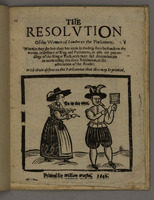 The Resolution of the Women of London to the Parliament. : Wherein They Declare Their Hot Zeale in Sendnig [sic] Their Busbands [sic] to the Warres, in Defence of King and Parliament, as Also Proceedings of the King at York
 This pamphlet was printed at the start of the First Civil War. It satirises the fervent enthusiasm of women who urged their unreliable husbands to take up arms in support of the King. On the cover is a striking woodcut print of a woman encouraging her husband—using an early version of a speech bubble—to “go to the wars.” He is shown with cuckold’s horns on his head, ignoring her as he focuses instead on a hornbook, a small paddle‑shaped board with a printed lesson sheet, usually used to teach children.
-
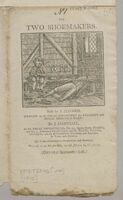 The Two Shoemakers
 'The Two Shoemakers' is a moral tale by writer and educator Hannah More, published as part of her Cheap Repository series—an initiative of inexpensive publications aimed at the literate poor, offering an alternative to radical, seditious, and immoral cheap print. The pamphlet was written by More herself and printed by the series’ first printer, Samuel Hazard, based in Bath. It was distributed by Hazard and John Marshall in London, as well as by “all booksellers, newsmen, and hawkers, in town and country.” The initial run of the series, printed by Hazard in 1795, sold hundreds of thousands of copies. To meet growing demand, printing was soon moved to Marshall’s larger operation.
-
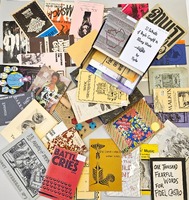 Various pamphlets
 This selection of pamphlets from one of Senate House Library's pamphlet collections reflects the abundence of 'spineless' print in our collection. With bright, engaging front covers, the contents of the pamphlets are diverse, containing works of poetry, political activism, social history and more.
-
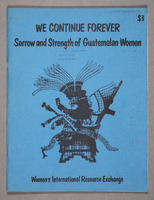 We Continue Forever: Sorrow and Strength of Guatemalan Women
 International exchange is at the heart of this pamphlet, which was published in New York City but contains the voices of Guatemalan women. The Women’s International Resource Exchange Service (WIRE) was founded by US feminists to publish global writing. A detailed consideration of this pamphlet and its role as a tool for resilience, written by Senate House Library librarian Julio Cazzasa, is available to read online.
-
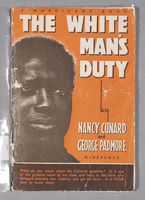 White Man's Duty
 This 1942 pamphlet is a discussion between publisher and anti-racist activist Nancy Cunard and writer and Pan-Africanist George Padmore about the Atlantic Charter. The Charter outlined the USA and UK’s plans for post-war “common principles”, including the right of all people to choose how they are governed. The pamphlet questions the Charter as an act of mere symbolism rather than substance, describing the gulf between promises and reality.
-
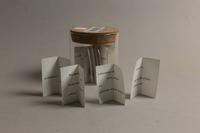 Who Finds Cells
 Created in response to Senate House Library’s 2018 ‘Rights For Women’ exhibition, this work is entirely without a spine, consisting instead of 18 small, folded slips of paper containing poetic text. The papers are housed within a glass jar, stopped with a cork. This format reflects the experience of viewing printed texts on display through the glass of an exhibition case.
-
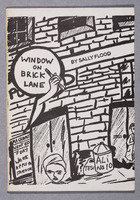 Window on Brick Lane
 Named for their location in the basement of St George’s Town Hall in Cable Street, The Basement Writers was formed in 1973 by teacher Chris Searle. Sally Flood, who was then nearly 50, was one of a few older writers who joined the group. A factory embroidery machinist and prolific poet, Sally described her verse as being like a diary. This is exemplified by this pamphlet, in which it is noted that most of her work was written “at the factory, from her seat with its window facing Brick Lane”. The illustrations in this pamphlet are by Patricia Flood.