-
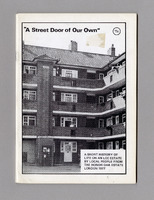 'A Street Door of Our Own': A Short History of Life on an LCC Estate
 Organised by community worker Jim Cowan, this pamphlet describes life on the Honor Oak Estate in South London. Alongside photographs, twelve elderly residents reflect on estate life in the 1930s via transcribed interviews. The residents used press interest about the publication to ensure the council upheld their promise to build a community centre on the estate.
-
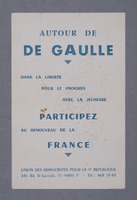 2 Flyers about the events of May 1968 in Paris (Autour De Gaulle and Les Jeunes Assument..)
 Printed amid the Paris student and worker uprisings of May 1968, these ephemeral flyers carry urgent calls for protest. Their rough printing captures the spontaneity and immediacy of revolutionary street literature.
-
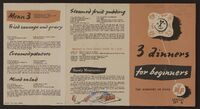 3 Dinners for Beginners
 One of three leaflets from a series of guides produced by the Ministry of Food during and after the Second World War. The leaflets offered advice on healthy eating and nutrition, cooking for oneself, frugal approaches to meal preparation, and a wide range of information related to food supply and rationing. This leaflet provides three two‑course meals for novice cooks, with dishes including mince with boiled jacket potatoes and cabbage, and semolina pudding with jam. It also suggests a timed method to ensure each meal is on the table by 1 pm.
-
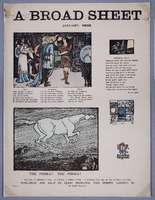 A Broad Sheet
 Between 1902-1903, publisher Charles Elkin Mathews produced a monthly series entitled 'A Broad Sheet', in a single sheet, broadside format. On display is the first issue from January 1902. This sheet features poetry by Irish writers George Moore and W.B. Yeats, whose poem ‘Spinning Song’ was first printed here. The hand coloured illustrations were by Yeats’s younger brother, Jack, and Pamela Colman Smith, who most famously illustrated the Rider-Waite Tarot deck.
-
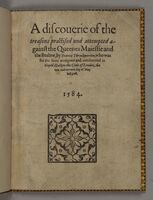 A Discouerie of the Treasons Practised and Attempted Against the Queenes Maiestie and the Realme
 From the golden age of English pamphleteering of the late 16th century is this account of Francis Throckmorton’s 1584 trial for treason. Throckmorton was part of a Catholic plot to depose Elizabeth I in favour of her cousin, Mary, Queen of Scots.
-
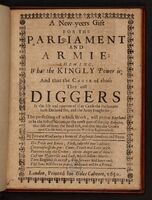 A New-Yeers Gift for the Parliament and Armie
 Gerrard Winstanley was the leader of the True Levellers, or Diggers, who advocated common land ownership and the restructuring of society into cooperative agrarian communities. This pamphlet, published in 1650, was Winstanley’s response to the overthrow of Charles I and the establishment of the English Commonwealth. In it, he appealed for further—and even more radical—change, calling for greater freedoms for all the people of England.
-
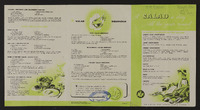 A Salad a Day All the Year Round
 One of three leaflets from a series of guides produced by the Ministry of Food during and after the Second World War. The leaflets offered advice on healthy eating and nutrition, cooking for oneself, frugal approaches to meal preparation, and a wide range of information related to food supply and rationing. This leaflet provides salad recipes and suggests a wide range of vegetables, leaves, and fruits suitable for salads, including kohlrabi, young kale, and dandelion leaves. It also offers useful tips for cooks on preparing ingredients and adding flavour and colour with different leaves and vegetables.
-
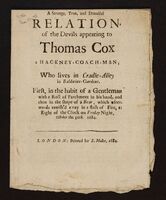 A Strange, True, and Dreadful Relation, of the Devils Appearing to Thomas Cox a Hackney-coach-man, Who Lives in Cradle-Alley in Baldwins-Gardens
 A sensationalist tract from the late 17th century. These publications featured accounts of the supernatural, crime, miracles, and even the last words of the condemned, delivered directly from the gallows. This particular tract recounts the story of a Hackney coachman who picked up a gentleman passenger—only for the man to transform into “a great black thing in the form of a bear with great flaming eyes” after refusing to pay his fare.
The pamphlet was printed by Elizabeth Mallet, a printer and bookseller who, in addition to producing sensationalist tracts, founded 'The Daily Courant', the first daily newspaper in Britain.
-
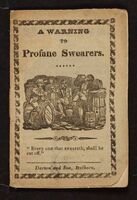 A Warning to Profane Swearers.
 A chapbook— a small pamphlet folded from a single sheet—published by an offshoot of the Darton family, who specialised in children’s books in the late 18th and early 19th centuries. It contains two stories, embellished with woodcuts, intended to teach children about the dangers of swearing and the importance of telling the truth. The first tells the story of an unfortunate enslaved woman who was struck dead by lightning after blaspheming. The second is the often‑retold tale of the young George Washington refusing to lie about cutting down a cherry tree. Works such as this give an insight into the kinds of works deemed appropriate for children and social and moral opinions of the time.
-
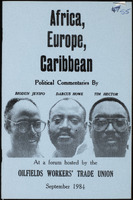 Africa, Europe, Caribbean: Political Commentaries
 Trinidad and Tobago’s Oilfields Workers’ Trade Union (OWTU) was led during the 1980s by George Weekes, who had been involved in Black Power activism. This pamphlet contains the text of talks given at an OWTU forum by Jeyifo Biodun, Darcus Howe, and Tim Hector. Internationalism and anticolonialism were at the heart of the talks, which were published as a pamphlet to reach a wider audience.
-
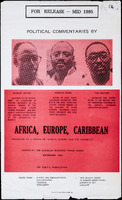 Africa, Europe, Caribbean: Political Commentaries
 This flyer advertises the sale of the Oilfields Workers’ Trade Union (Trinidad and Tobago) pamphlet 'Africa, Europe, Caribbean: Political Commentaries'. The pamphlet was available for sale directly from the Union in San Fernando, Trinidad, and also in London at New Beacon Books. Co-founded by John La Rose, New Beacon Books was the UK’s first Black publisher and bookshop, and is still running today.
-
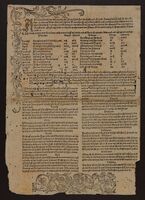 Almanach auf das Jahr 1492 [Deutsch].
 Almanacs are compilations of information and data on agricultural, nautical, astronomical, astrological, or other events for the year ahead. With the advent of printing in Europe in the 15th century, they were produced in large numbers as single sheets or pamphlets. They are among the earliest printed "spineless wonders" yet due to their ephemeral nature, few have survived. This almanac was printed in Germany in 1491 for the year 1492, and includes the phases of the moon and guidance on the effects of the stars on health.
-
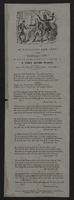 An Excellent New Song, Called "Rascals Ripe!" : In Which Some Account is Given of a Very Noted Character. Sung to the Tune of - "Cherry Ripe! Cherry Ripe!".
 A song sheet that pilloried the radical agriculturist and pamphleteer William Cobbett. It was first printed around 1820 and references several of his projects, including his promotion of new strains of corn and his attempt to bring Thomas Paine’s remains to Britain from America. The cartoon at the head of the song, by George Cruikshank, shows Cobbett selling his journal, the 'Political Register', to a hawker whose sign describes it as “two‑penny trash.” This label was coined by Cobbett’s opponents after he began selling the 'Register' as a two‑pence pamphlet to avoid newspaper taxes and make it accessible to readers in the labouring classes.
-
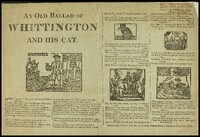 An Old Ballad of Whittington and His Cat.
 This broadside tells the popular rags‑to‑riches story of Dick Whittington, the 15th‑century mayor of London whose tale—along with the cat that helped him earn his fortune—passed into folklore. It was a favourite subject for chapbooks and broadsides like this one, often accompanied by woodcut illustrations. This example was printed and sold by John Pitts, who was based in Seven Dials, Covent Garden. In the late 18th and early 19th centuries, the area was a hub for cheap street literature.
-
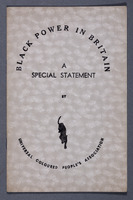 Black Power in Britain: A Special Statement
 Written and published by the newly founded Universal Coloured People’s Association, this pamphlet is an articulation of intentions, beginning with the words ‘Our Manifesto’. The manifesto aims to develop an international Black consciousness empowering identity and community self-determination. Examples of the often brutal experience of being Black in Britain, including restriction of access to work and housing, sit alongside plans for grassroots organising, including nurseries and study groups.
-
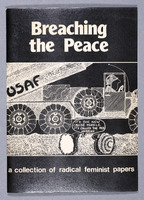 Breaching the Peace : (A Collection of Radical Feminist Papers)
 Published by Onlywomen Press in 1983, 'Breaching the Peace' was a collection of papers by radical feminists that emerged from a workshop titled “The Women’s Liberation Movement versus The Women’s Peace Movement or How Dare You Presume I Went to Greenham.” The papers examined and criticised the women’s peace movement. The contributors argued that women-only camps, such as Greenham Common, presented a media‑friendly image of women’s liberation and that being female-only did not make them inherently feminist. The pamphlet format offered a quick and convenient way to disseminate and debate the discussions that arose from the workshop.
-
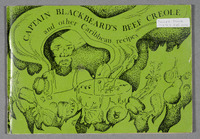 Captain Blackbeard's Beef Creole: And Other Caribbean Recipes
 In 1977, and as part of the work of local community bookshop The Bookplace, the Peckham Publishing Project began with the aim to publish local writing. This pamphlet originated in the Bookplace’s English classes. The contributors discussed together ingredients and terminology and produced a Caribbean (mostly Jamaican) recipe book interspersed with related food information. The illustrations were provided by students from the local Collingwood Girls’ School.
-
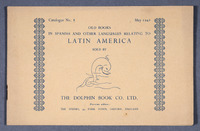 Catalogue no. 8: Old Books in Spanish and Other Languages Relating to Latin America
 Published in May 1942 by the Dolphin Book Company, this catalogue offered rare and second-hand books in Spanish and other languages on Latin America. Issued during wartime Oxford, it highlights Britain’s academic and cultural interest in the region’s history, literature, and politics.
-
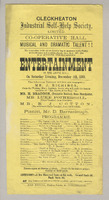 Cleckheaton Self-help Society Entertainment Playbill; Song
 This playbill advertises an evening of songs, music, and recitations held at the Co-operative Hall, Cleckheaton, on 4 December 1869. Organised by the Cleckheaton Self-help Society, the event reflects the popularity of self-help and mutual improvement movements in Victorian Britain. Societies like this encouraged working people to combine education, recreation, and moral improvement, often through lectures, reading groups, and cultural entertainments. The Co-operative Hall itself symbolised community ownership and civic pride. Though a single sheet, the playbill captures the aspirations and cultural life of an industrious Yorkshire town.
-
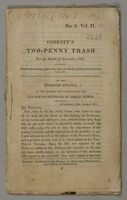 Cobbett's Two-Penny Trash
 William Cobbett was a radical politician and journalist active during the first three decades of the 19th century. He produced a periodical, 'The Political Register', to share news and political commentary with the labouring poor. In 1816, when the government imposed heavy taxes on the radical press, Cobbett responded by publishing an unstamped version of the 'Register' for two pence—mockingly dubbed “two‑penny trash” by his detractors. Cobbett embraced the insult and adopted it as the title of a monthly version of his periodical.
This issue, from November 1831, is part of the revived run of 'Two‑Penny Trash'. It survives today in much the same condition as when it was sold by hawkers nearly two hundred years ago: unbound, with the pages simply stitched together.
-
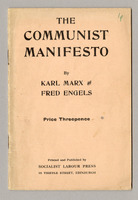 Communist Manifesto
 This is one of the most famous and reprinted pamphlets. Published in German in 1848, it has been translated into numerous languages with lasting political influence worldwide. Senate House Library’s collections include many editions of the manifesto, from the first English edition, rebound in leather covered boards for preservation, to more humble editions. The copy on display, with simple pink paper wrappers, lists one of the two famous authors as ‘Fred Engels’.
-
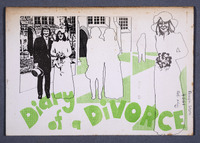 Diary of a Divorce
 Manchester’s Commonword stemmed from an oral history project, beginning in 1977 as the Commonword Workshop. The groups developed to include one focussing on women’s writing. This pamphlet was written and illustrated by Wendy Whitfield, who also worked at Commonword. Designed to reflect a calendar, the pamphlet depicts the disintegration of a marriage from the woman’s point of view, against a backdrop of left-wing political activism.
-
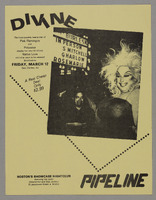 Divine: The Incomparably Insane Star of Pink Flamingos [...] With Accompanying Leaflet Queer Ephemera
 This poster, published by Camp Books in 2018 as part of the Queer Ephemera series, reproduces a Xerox flyer advertising drag icon Divine at Boston’s Pipeline nightclub on 12 March. The flyer exemplifies the DIY aesthetics of queer nightlife promotion, where photocopied posters circulated within underground club scenes. Both celebration and archive, it reflects the visibility, creativity, and resilience of LGBTQ+ communities and their cultural spaces in the late twentieth century.
-
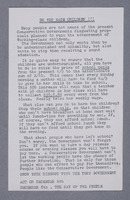 Do You Hate Children!!!
 In the 1960s and 1970s, the provision of low‑cost healthy meals and milk for British schoolchildren became politically charged following government cuts to education and welfare budgets. Do You Hate Children!!! is a single‑sheet typescript flyer that staunchly attacked the Conservative government’s plans to raise the price of school meals and abolish free school milk, highlighting the impact these measures would have on the health and education of working‑class children. The flyer was likely produced for the trade unions’ day of protest on 8 December 1970. The following day, protestors gathered in Downing Street to oppose the cuts proposed by the Education Secretary, Margaret Thatcher.
-
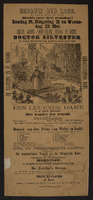 Dutch Playbill for Doctor Silvester
 A playbill advertising a performance by the English magician Doctor Silvester, who toured Australia, New Zealand, and Southeast Asia during the 1870s and 1880s. This particular playbill promotes a show in Jakarta—then known as Batavia—and features an illustration of Doctor Silvester's "Beautiful Entranced Lady" aerial suspension illusion, performed with his daughter Daisy.