-
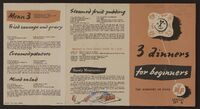 3 Dinners for Beginners
 One of three leaflets from a series of guides produced by the Ministry of Food during and after the Second World War. The leaflets offered advice on healthy eating and nutrition, cooking for oneself, frugal approaches to meal preparation, and a wide range of information related to food supply and rationing. This leaflet provides three two‑course meals for novice cooks, with dishes including mince with boiled jacket potatoes and cabbage, and semolina pudding with jam. It also suggests a timed method to ensure each meal is on the table by 1 pm.
-
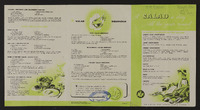 A Salad a Day All the Year Round
 One of three leaflets from a series of guides produced by the Ministry of Food during and after the Second World War. The leaflets offered advice on healthy eating and nutrition, cooking for oneself, frugal approaches to meal preparation, and a wide range of information related to food supply and rationing. This leaflet provides salad recipes and suggests a wide range of vegetables, leaves, and fruits suitable for salads, including kohlrabi, young kale, and dandelion leaves. It also offers useful tips for cooks on preparing ingredients and adding flavour and colour with different leaves and vegetables.
-
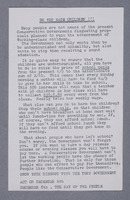 Do You Hate Children!!!
 In the 1960s and 1970s, the provision of low‑cost healthy meals and milk for British schoolchildren became politically charged following government cuts to education and welfare budgets. Do You Hate Children!!! is a single‑sheet typescript flyer that staunchly attacked the Conservative government’s plans to raise the price of school meals and abolish free school milk, highlighting the impact these measures would have on the health and education of working‑class children. The flyer was likely produced for the trade unions’ day of protest on 8 December 1970. The following day, protestors gathered in Downing Street to oppose the cuts proposed by the Education Secretary, Margaret Thatcher.
-
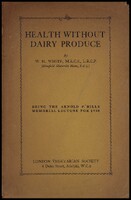 Health Without Dairy Produce
 W. H. White was a doctor who advocated vegan diets from infancy, promoting his views through lectures, recipe books, and the maternity homes he managed. This 1938 pamphlet, prompted by the craze for “milk bars,” extols the benefits of a dairy‑free diet and includes various testimonials. White’s views were far from mainstream and milk in particular remained a staple of dietary recommendations.
-
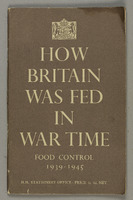 How Britain Was Fed in War Time: Food Control, 1939-1945
 Governments and institutions have long been prolific producers of spineless material: published acts, policy and research papers, reports, and leaflets offering information and advice. Such publications were an important means of spreading information and propaganda for the UK government during the Second World War. The Ministry of Food produced numerous pamphlets and leaflets related to food control and rationing. This particular pamphlet, published in 1946, provided an account of how food resources were mobilised during the war, including extensive statistical data and information that had been suppressed in the preceding five years.
-
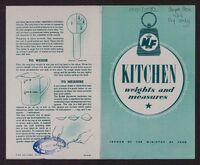 Kitchen Weights and Measures
 One of three leaflets from a series of guides produced by the Ministry of Food during and after the Second World War. The leaflets offered advice on healthy eating and nutrition, cooking for oneself, frugal approaches to food preparation, and a wide range of information related to food supply and rationing. This leaflet provides invaluable guidance on weights and measures, giving both volume and ounce equivalents for a range of common ingredients.
-
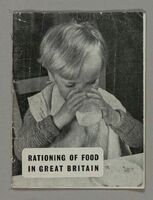 Rationing of Food in Great Britain
 This pocket‑sized booklet, published in September 1946, provided practical information on rationing following the end of the Second World War. It explained the rationale and background of rationing, as well as the quantities of rationed goods available under different schemes. It also outlined what could be obtained through canteens, schools, and communal “British Restaurants,” which provided affordable meals for workers. Food control remained essential after the War, and for some foodstuffs became even stricter. Booklets such as this were an important tool for communicating the continuing necessity of rationing.