-
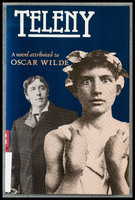 Teleny : a novel
 This sexually explicit “Physiological Romance” was first published by pornographer Leonard Smithers in 1893 in a two-volume edition of 200 copies, anonymously and with a false place of publication to deter Victorian censors. Although ‘Teleny’ may have been produced collaboratively, strong hints that Oscar Wilde was at least the principal author were already circulating. It has been attributed to Wilde since the Olympia Press edition of 1954. ‘Teleny’ continued to be reprinted in expurgated editions over the course of the twentieth century. The Gay Sunshine Press edition is, according to editor Winston Leyland, “the first unexpurgated version in English based on the original manuscript”.
-
 Tell me why
-
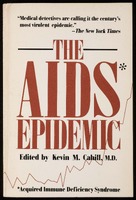 The AIDS epidemic
 In spring 1983, a “devastating, puzzling and fatal” new illness was spreading rapidly throughout the United States. At that time, some three to four years after the first cases of HIV/AIDS had emerged and under two years since the first cases were reported in the ‘New York Times’, New York City was the hardest-hit metropolitan area with 595 cases and 228 deaths. This astonishingly prescient book edited by physician Kevin Cahill (1936-2022) comprises the published proceedings of a symposium that took place at Lenox Hill Hospital, New York City. Doctors, epidemiologists and policy-makers gathered to discuss how they might combat the disease, stating that “there is every indication that we will soon be in the midst of a worldwide epidemic”. As of 2024, HIV has claimed over 40 million lives worldwide.
-
 The blank page
-
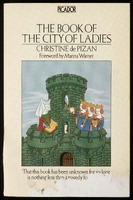 The book of the city of ladies
 This is quite possibly the most surprising book seized during the raids and certainly is the oldest narrative, first printed in French in 1405. Christine de Pisan (or Pizan) (1364-1430) was a Medieval Italian woman who lived in France and, following the death of her husband, wrote over twenty works to support her family. Using the device of a discussion with ladies called Reason, Rectitude and Justice, this work highlights women’s oppression, including lack of access to education and misogynistic portrayal in texts written by men, in words which have resonance for more contemporary feminist thought. As befits the times, the text is also underpinned by Christian values, and Christine spent her final years living in a convent. It is unclear which edition of the book was seized during the ‘Operation Tiger’ raids.
-
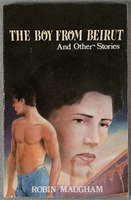 The boy from Beirut : and other stories
 Robin Maugham (1916-1981), Second Viscount Maugham of Hartfield and nephew of the novelist W. Somerset Maugham, wrote short stories, novels, screenplays, plays and non-fiction. “Bisexual, though predominantly homosexual”, as he put it, Maugham published his first short story in 1943 (‘The 1946 Ms’, praised by George Orwell), turning more to gay themes in his post-1970 work. Published posthumously, Maugham’s ‘The Boy from Beirut’ consists of eight short stories, introduced by writer and former editor for ‘Gay News’, Peter Burton. These stories draw partly on Maugham’s time in North Africa during the Second World War and had all previously been published in the UK. The volume closes with Burton’s long interview with Maugham, first published in ‘Gay Sunshine’ magazine in the Summer/Fall edition, 1977 (no. 33/34).
-
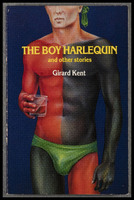 The boy harlequin : and other stories
 Fourteen short stories from a now little-known American author Girard Kent, the nom-de-plume of a Texan writer named Lon Rogers. Though the collection did well enough for Gay Sunshine Press to bring out a second edition in 1985, its mildly distasteful blend of humour and eroticism has not dated well. Several stories feature sexual relationships between adolescent boys and adult men, and as a perceptive contemporary review in New Zealand magazine ‘Pink Triangle’ noted, the characters feel more like “fantasy material” than fully realised protagonists. ‘The Boy Harlequin’ was Kent’s first book, and he seems to have published nothing further, either under his own name or his pen name.
-
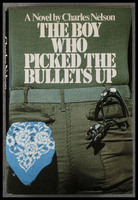 The boy who picked the bullets up
 Charles Nelson (1942-2003) served as a Marine in the Vietnam War and claimed that some of this novel was autobiographical. The story follows medic Kurt Strom during a year he spent stationed in Vietnam. Strom’s experiences as a gay Marine are relayed via letters he sends home to his family and friends. One reviewer described the novel as containing “endless humour and devastating realism”, while the gay perspective was praised for presenting “decidedly different” insights on war. The novel’s title is taken from the poem of the same name by Arthur Rimbaud. Published by William Morrow, the book’s dust jacket shows a soldier’s trousered backside, with a blue bandana in the left pocket, alluding to ‘flagging’, a coded means of expressing sexual preferences.
-
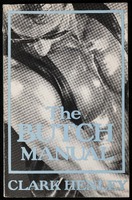 The butch manual : the current drag and how to do it
 A tongue-in-cheek manual for gay men on how to appear more ‘butch’, or stereotypically masculine, written in the style of a women’s magazine – complete with a problem page featuring Gertrude Stein as a fictional agony aunt. Butch men shun smiling, screaming and “misquoting Dorothy Parker” in favour of moustaches, yelling and talking dirty, according to author, model and artist Clark Henley (1950-1988). The book is undoubtedly influenced by the wildly popular contemporary humorous titles ‘The Official Preppy Handbook’ (1980) and ‘The Official Sloane Ranger Handbook’ (1982). Henley also drew the rare 1976 ‘Tails of the City’ ‘Alligator Oz’ map of San Francisco, a gay map of the city populated by cartoon alligators, and ‘A Butch Look at America’ (1982), in which the United States is represented by torn cut-off jeans over bare buttocks. Diagnosed HIV-positive in 1986, Henley died in San Francisco of AIDS-related causes in 1988, aged just 38.
-
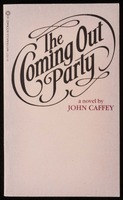 The coming out party : a novel
 Jaded by West Hollywood gay life, long-term lovers Cal and Sidney yearn for a new distraction. In this queer reworking of ‘My Fair Lady' they find one in a young gay man, overweight college student, Hal. They take him on as a project, schooling him in Tennessee Williams, ‘Brideshead Revisited’ and E.M. Forster’s ‘Maurice’ and putting him through a punishing programme of physical transformation. Republished in 2001 via self-publishing platform iUniverse, this second edition is described as “A novel so outrageous it was banned in England!”, a possible reference to ‘Operation Tiger’. The blurb also claims Caffey won a PEN Award for an Outstanding First Work of Fiction, receiving a Special Commendation in 1983. However, no evidence either for this specific award or this commendation can be found.
-
 The Danger Of Complacency
-
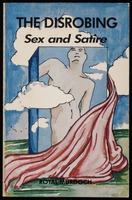 The disrobing : sex and satire
 Poet and author Royal Murdoch, known to friends as Kenneth, was born in California in 1898 and moved to Mexico City in the mid-1960s, where he died in 1981. ‘The Disrobing’, ten copies of which were seized in the ‘Operation Tiger’ raids, is a posthumously published collection spanning fifty years, including poetry, diary extracts, letters and part of an unfinished novel. It was edited by Gay Sunshine’s Winston Leyland. Murdoch himself wrote of ‘Gay Sunshine Journal’ that “I was already an old man when I first saw an issue” and “each issue brings me a renewed sense of liberation”. Murdoch’s prose works in particular describe life in pre-Stonewall America. His papers are now held by the Harry Ransom Center, The University of Texas at Austin.
-
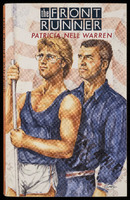 The front runner
 After the Stonewall Uprising, many mainstream publishers realised they could have commercial success with gay fiction. ‘The Front Runner’ was the first bestselling novel of this era, selling millions of copies when first published in 1974 by William Morrow. The story concerns Billy Sive, a young, gay athlete training for the 1976 Olympics, and his relationship with his older sports coach. Patricia Nell Warren (1936-2019), who was also an athlete, considered the novel’s publication to be a step in her own coming-out process. Latterly, Warren self-published lesbian fiction under the Wildcat Press imprint, fought online censorship laws and was one of the initial fifty nominees for the National LGBTQ Wall of Honor in New York City. The edition seized was probably the 1975 Bantam Books paperback rather than the one on display here.
-
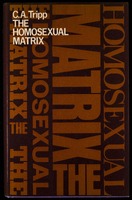 The homosexual matrix
 First published in America by McGraw-Hill in 1975, the preface to this British edition includes author C.A. Tripp’s (1919-2003) reflections on the book’s initial reception. More positively received than the author had hoped among the scientific community and in much of the media, including ‘Newsweek’, it nevertheless provoked anti-gay moralising in ‘Time’ magazine and ‘The New York Times’, while some papers cancelled their reviews altogether. Tripp, a psychotherapist, fails to mention that the book was also criticised by LGBTQ+ reviewers for its pseudo-scientific categorisation of gay men into ‘types’, its misogyny, and its refusal to engage with gay liberation as a social movement. The striking typographic cover design is by Marcy J. Katz. The edition on display is from the library of actor, author and bookseller Noel Lloyd.
-
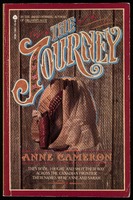 The journey
 This knowingly ahistorical lesbian feminist Western, set in Canada and the US in the nineteenth century, is dedicated to “all the little girls who always wanted to [...] grow up to be cowboys”. Teenager Anne leaves home and teams up with sex worker Sarah. Travelling together across the Pacific Northwest, they become lovers, have a child and receive support from a matrilineal group of Indigenous people. Despite reversing gender roles, the novel is in other ways a romp through the stereotypes of the Western genre – wagons, guns, vigilante justice. Anne Cameron (1938-2022) was a prolific writer of fiction for adults and children, as well as poetry and drama for stage and screen. Born Barbara Cameron, she later wrote under the name Cam Hubert. ‘The Journey’, her third novel, was reissued in 1986 by feminist press Spinsters/Aunt Lute.
-
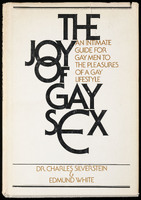 The joy of gay sex : an intimate guide for gay men to the pleasures of a gay lifestyle
 A collaboration between Dr Charles Silverstein (1935-2023) and novelist Edmund White (1940-), “by gays, for gays”. Structured as an A-to-Z guide to gay life, from Androgyny to Wrestling, plus a short bibliography, it is illustrated throughout by Michael Leonard, Ian Beck and Julian Graddon. Riding high on the popularity of ‘The Joy of Sex’ (1972), it sold out its first print run of 75,000 copies. Some commentators, however, were critical of this apparent mainstreaming. “If we have reached a point where cultural interests include the marketing of our sex lives, it would be nice for some basic civil rights to come along with that,” wrote Michael Bronski in ‘Gay Community News’ in November 1977. “You can still get arrested for having a good time.” The book was later used in healthcare during the AIDS crisis, and ‘The New Joy of Gay Sex’ (1993) was substantially updated with safe sex information.
-
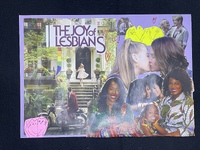
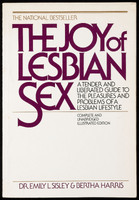 The joy of lesbian sex : a tender and liberated guide to the pleasures and problems of a lesbian lifestyle
 Published a year after ‘The Joy of Gay Sex’, the subtitle of this volume introduces the “problems” as well as “pleasures” of lesbian life in marked contrast to its gay male counterpart. Written by Dr Emily L. Sisley (1930-2016) and novelist and Daughters, Inc. founder Bertha Harris (1937-2005), and illustrated by Yvonne Gilbert, Charles Raymond and Patricia Faulkner, it follows the formula set by ‘The Joy of Sex’ in 1972. It covers all aspects of lesbian life and sexuality from “Alcohol and sex” to “Water, water, everywhere”, followed by a bibliography. It had a smaller initial print run than ‘The Joy of Gay Sex’ – 50,000 rather than 75,000 copies – and its reception was mixed. One (lesbian) reviewer objected to its misandry while another suggested its “authors cling to the concept of a penis”. It was also criticised for its omissions, “myths and misconceptions”, particularly around disability, race and class.
-
 The Joy of Lesbians
-
 The Kryptonite kid : a novel
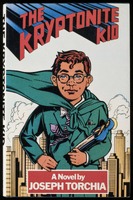
 An affecting novel of one-sided letters to Superman from schoolboy Jerry Chariot and his best friend Robert Sipanno. Filled with a mixture of curiosity and naivety (down to the preservation of Jerry’s childlike spelling and grammar), the letters wrestle with everyday problems of homelife, hero-worship and Catholic schooling as well as questions about what “a queer” is and whether Superman pees out of his “Thing”. Joseph Torchia (1946-1996), a journalist for various newspapers on the West Coast of the US, published one other full-length work and a short story, and wrote two further unpublished novels. He turned to photography later in life. His papers are held at Stanford University.
-
 The long awaited return of books
-
 The Lord won't mind
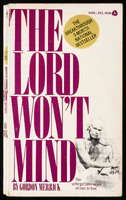
 This is the opening book in a gay romance trilogy by Gordon Merrick (1916-1988), first published in 1970. Young, handsome and improbably well-endowed Charlie Mills is introduced to the equally attractive Peter Martin in late 1930s New Jersey. It is love – and lust – at first sight. Advertised in ‘The New York Times’ as “the first homosexual novel with a happy ending”, the book spent sixteen weeks in the ‘Times’ top ten, becoming a bestseller that secured Merrick’s fortunes. Criticised for its misogyny and as “corny, oddly dated and saccharine” by a discerning reviewer for ‘Gay NYC’, it nonetheless became a guilty pleasure for generations of gay men.
-
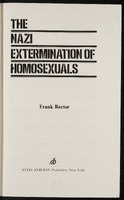 The Nazi extermination of homosexuals
 This book, which is held in several UK academic libraries, outlines the treatment of gay men in Germany during the Third Reich. Much of the research is based on secondary sources which expose increasing societal homophobia, culminating in the imprisonment of gay men in concentration camps where they were forced to wear a pink triangle stitched to their clothing and undergo horrific, brutal treatment. The final two chapters focus on personal, pseudonymous testimony from men who survived, including an extract from a 1972 German book, published in English in 1980, entitled ‘The Men with the Pink Triangle’. By the 1980s, the pink triangle symbol had been reclaimed by LGBTQ+ activists.
-
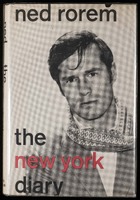 The New York diary of Ned Rorem
 The ‘New York Diary’ begins with Ned Rorem (1923-2022) returning home from Paris and is the second volume of Rorem’s diaries, covering the period 1955-1961. As with the previous volume, Rorem uses the diary form to discuss the – often famous – people he meets, his thoughts on the life of an artist and his own personal life, including his relationships and alcoholism. Rorem noted that these New York diaries were “less frivolous and more outspoken” than those he wrote in Paris. The exhibition shows Rorem’s diaries in two separate volumes, although in the list of books seized from Gay’s The Word they are listed as one title. It is likely, therefore, that the combined edition published by US paperback imprint Avon was the one seized.
-
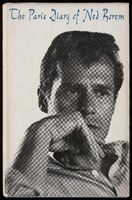 The Paris diary of Ned Rorem
 Ned Rorem (1923-2022) was an American composer of modern classical music, for which he was awarded the Pulitzer Prize for Music in 1976 and a Grammy in 1989. Rorem was also gay, and documented his life in a series of diaries which began with his ‘Paris Diary’, covering the early 1950s when he was in his late twenties. Famed not only for his musical talent but also his good looks, Rorem was a dedicated socialite who gained entry to the Parisian artistic scene under the mentorship of Vicomtesse Marie-Laure de Noailles. This selection of his diaries shows the extent of Rorem’s connections not only via his writing but also through the inclusion of photographs taken of him by artists such as Man Ray and a portrait illustration by Jean Cocteau.
-
 The playbook for men about sex
 Author and publisher Joani Blank (1937-2016) described this playbook as the “companion piece” to the ‘Playbook for Women About Sex’. The two titles follow the same format and style and aim to encourage sexual awareness in the reader through the questioning and reflective prompts of a workbook. Blank notes at the start that she was compelled to write this title as no man had done so, although she was assisted by men who advised, edited and reviewed the playbook. The honest and direct content of the playbooks for men and women and the other sex positive titles published by Blank’s Down There Press, meant it was often difficult to locate printers who were willing to produce the books. In 1980, Blank co-authored ‘The Playbook for Kids About Sex’ which was condemned by the UK’s Conservative government in their election campaigning.
