-
Title
-
Fables of Aesop and Others
-
Heading
-
The Best of Both Worlds: Wood Engraving
-
Description
-
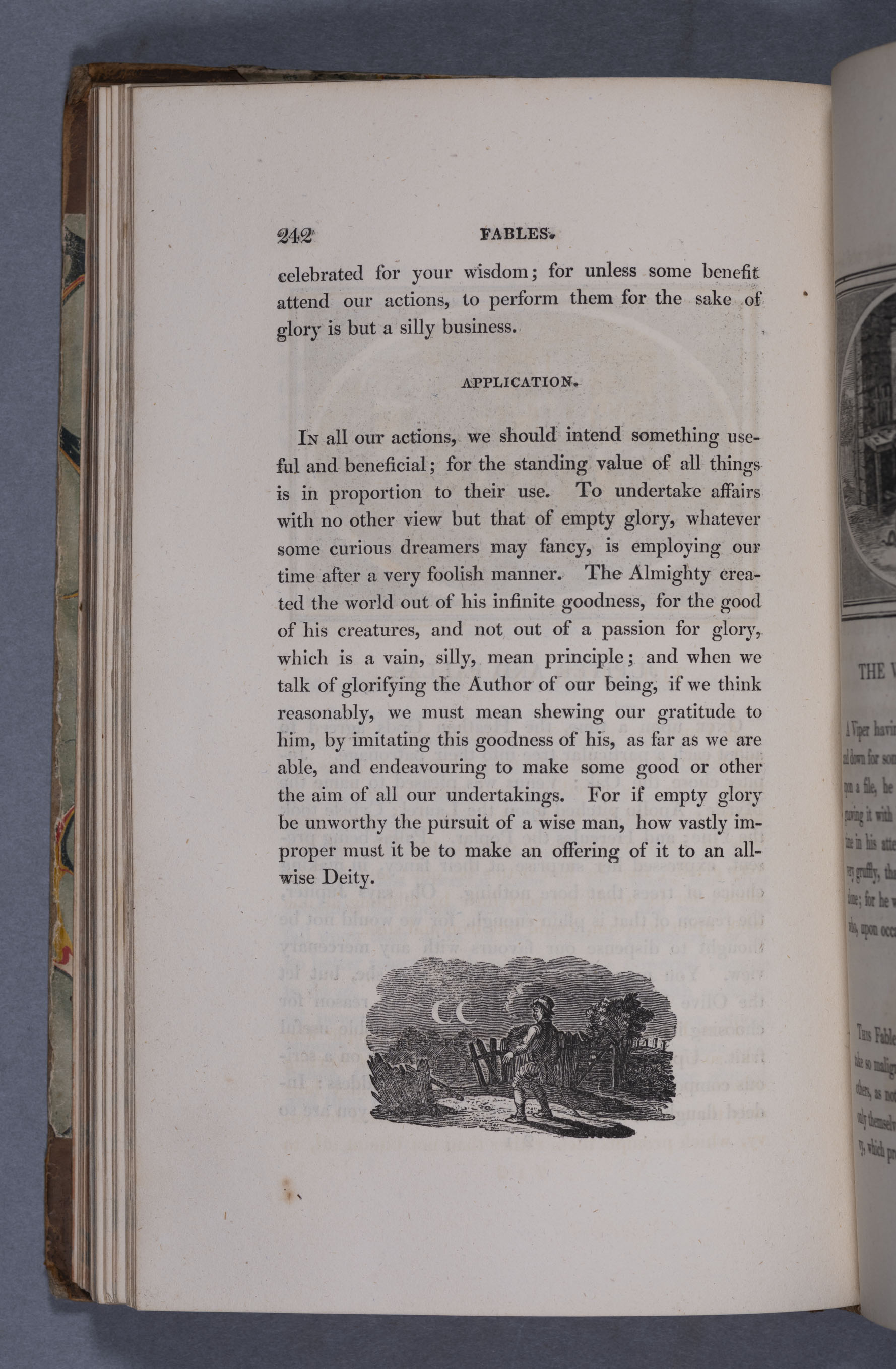
The illustrative technique shown here postdates Caxton by three centuries. Thomas Bewick developed the art of wood engraving in the late eighteenth century. Wood engravings combined the best of woodcuts and metal engravings. They were made by cutting into the end-grain of hard wood with the burin used for copper engraving, enabling much more detailed images than could be obtained by woodcuts. But whereas copper engraving had to be printed separately from type, wood engravings had the advantage that they could be printed at the same pull of the press.
William Caxton was Aesop’s first translator into English. He translated the fables from an intermediary French translation and printed them twice, both times as folios with woodcut illustrations, in 1484 and again in the 1490s.
-
Date of Publication
-
1818
-
Century
-
19th
-
Illustrations
-
Wood Engraving

 Beyond CaxtonSee all items with this value