-
 National Trust
 As Europe’s largest conservation charity, we look after nature, beauty and history for everyone to enjoy. We do it with the help of millions of members, volunteers, staff and donors. Without this, we couldn’t care for the miles of coastline, woodlands, countryside and the hundreds of historic buildings, gardens and precious collections we protect.
-
 Natural History Museum
 The Museum's Library and Archives holds one of the world's finest collections of natural history literature, artwork, photographs and manuscripts. The materials are stored across our two sites in South Kensington and Tring.
Museum librarians, scientists and generous donors help to build and maintain our comprehensive Library collection, which complements and supports the specimen collection. The Library collection is primarily aimed at Museum scientists and postgraduate researchers, but the materials are available to anyone who wishes to use them.
The Museum Archives contain the institutional archive of the Natural History Museum, providing a unique resource that documents the history of our collections, collectors, staff and iconic buildings. The archives trace the life of the Museum from its beginnings as part of the British Museum to its opening in 1881 through to the present day.
-
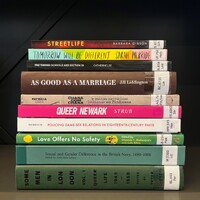 New Books in the IHR Library: Queer History
 This blog post was written by Lara Short, Graduate Trainee Library Assistant at the Institute of Historical Research, in March 2025, in connection with LGBTQ+ History Month.
-
 Newham Heritage Centre
 At our Archives and Local Studies Library in Stratford, we preserve and platform the history of Newham and its people. In autumn 2024, renovation work began on the Grade II-listed Canning Town Old Library. This historic building is set to reopen in 2027 as the borough’s new Heritage Centre, housing a range of facilities, including state-of-the-art archive storage, a reading room, exhibition space, digital suite, learning space, and a new café. While the building work continues, we're doing as much as we can to get out and about to share our collections.
-
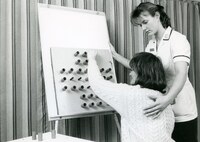 NHS 75: Celebrating the 75th anniversary of the National Health
Service
NHS 75: Celebrating the 75th anniversary of the National Health
Service The history of the NHS in our collections
-
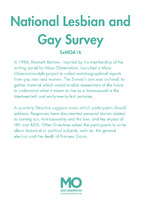 NLGS (National Lesbian and Gay Survey)
 In 1986, Kenneth Barrow, inspired by his membership of the writing panel for Mass Observation, launched a Mass Observation-style project to collect autobiographical reports from gay men and women. The Survey's aim was archival: to gather material which would enable researchers of the future to understand what it meant to live as a homosexual in the late-twentieth and early-twenty-first centuries. A quarterly Directive suggests areas which participants should address. Responses have documented personal stories related to coming out, homosexuality and the law, and the impact of HIV and AIDS. Other Directives asked the participants to write about historical or political subjects, such as: the general election and the death of Princess Diana.
-
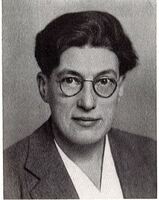 No common appearance - A pathologist of note
 Pioneering pathologist Dr Joan M. Ross won the John Hunter medal for her outstanding contributions to pathological anatomy in 1946, Learn more about this "staunch friend and wise teacher", a true individual who, despite having written a standard textbook in the subject, has thus far not received the same acclaim as other early women pathologists.
-
 Norfolk Heritage Centre, Norfolk Library and Information Service
 The Norfolk Heritage Centre holds the most comprehensive collection of published material telling the story of Norfolk and its people. These include more than half a million books, maps, newspapers and photographs with nearly all our collections are searchable on the library catalogue.
-
 North East Wales Archives
 North East Wales Archives was formed in April 2020 when Denbighshire Archives (Ruthin) and Flintshire Record Office (Hawarden) came together to offer a joint service. We collect historical records relating to North East Wales, and preserve them for future generations. We also encourage the public to come to our search-rooms and use our records in person.
-
 North Yorkshire Archives
 North Yorkshire Archives, based in Northallerton, collects historic and current records for North Yorkshire and provides recordkeeping services for North Yorkshire Council. We preserve records of significance for the study and understanding of North Yorkshire and its communities, holding them in trust for the use of present and future generations.
We encourage people of all ages and backgrounds to engage with our collections, inspiring them to connect with their past and present, develop a sense of place, and improve health and wellbeing.
-
 Northern Ireland: Living with the Troubles
 This blog post was written by Kaili Smith and Charlotte Willsmore, Research Support Librarians at IWM London, for History Day 2023 and explores library material relating to the IWM’s exhibition Northern Ireland: Living with the Troubles (May 2023- January 2024).
-
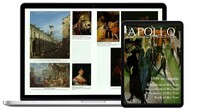 Open Sample Pages from Apollo Magazine
 Apollo has launched a complete online archive. Over a century’s worth of issues dating back to 1925 are now available to readers for the first time via Exact Editions. The comprehensive, fully-searchable digital resource features all 1200+ issues of the magazine. The leading monthly magazine is an authority on art collecting, the international art market, and museum exhibitions - widely considered to be one of the world’s most renowned and respected art publications. Explore some fascinating articles from the extensive archive here.
-
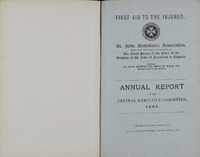 Order of St John Annual Reports
 These records tell us about the Order of St John’s members, their roles and ranks, promotions, admissions, and obituaries. They tell us about the work of the Order overseas, the insignia, statutes, and reports on the Chapter. The Annual Reports also play a key part in telling the history of St John Ambulance by providing information on medical training, reports on the health of the nation, information about technological advances in healthcare, and details of the formation and disbanding of various nursing and ambulance units over time. They tell us how important the work of our first aid volunteers is, how it was done, and where it took place.
-
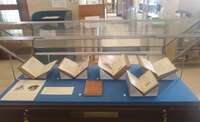 Oscar Wilde and Classical antiquity: an exhibition
 Between the 31 May and the 13 September 2024, the Combined Library of the Institute of Classical Studies and the Hellenic and Roman societies hosted an exhibition exploring the relationship between Oscar Wilde and the Classical world through the collections of the library.
-
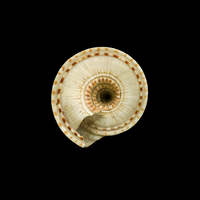 Our Digitised Collections
 Discover the Linnean Society's digital repository of books, manuscripts, and biological specimens.
-
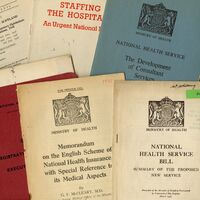 Oxford Brookes University Special Collections and Archive
 Oxford Brookes University’s Special Collections Reading Room is located within the Headington Library. Their mission is to curate unique collections for teaching and research and anyone may use our collections. The collections include materials on art and architecture, publishing and literary prizes, public and allied health and the Oxford Brookes University Collection.
-
 Oxfordshire Record Society
 The Oxfordshire Record Society was founded in 1919. In 2019, it celebrated 100 years of publishing primary sources for the history of the county of Oxfordshire, and raising awareness and understanding of this vital evidence of the historic county.
-
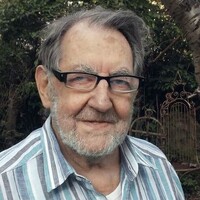 Papers of Joseph Sonnabend
 Dr Joseph Sonnabend, physician, clinical researcher and community activist played a significant role in the AIDS epidemic in the United States.
His papers include records from his Greenwich Village private practice from 1980-2000; epidemiology and research on cause and treatment of HIV/AIDs and AIDS activism groups such as AIDS Medical Foundation, Community Research Initiative and PWA Health Group. The archive also contains his earlier research on interferon in England for the Medical Research Council.
-
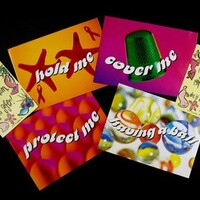 Papers of Professor Kaye Wellings
 This collection of papers consists of three series of archival material principally relating to research undertaken by Professor Kaye Wellings, social scientists and known internationally for her research on sexual and reproductive health.
Material includes a mixed photographic collection of HIV/AIDS public education campaigns collected as part of EC funded programme, Concerted Action: Assessing AIDS Prevention Strategies (1988 -1991) and follow-up projects. Also includes UK AIDS press coverage collection, originally created by the Health Education Authority, spanning 1983-1993.
-
 Papers of Professor Peter Piot
 The school’s former Director, his archives contains his epidemiological fieldwork in sub-Saharan Africa on HIV/AIDS and the Ebola Virus and his later international role as the Executive-Director of UNAIDS, 1996-2008. They provide access to one of the world’s leading agencies in fighting HIV/AIDS and document significant developments within Piot’s tenure, such as UNAIDS’ establishment, the Doha Declaration on AIDS (2001) and the formation of the Global Fund to Fight AIDS, Tuberculosis and Malaria.
-
 Papers of Professor Virginia Berridge
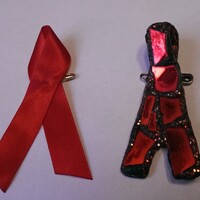
 Professor Virginia Berridge, Professor of History and Director of the Centre for the History of Public Health archive collections relating to her working life as a historian and social researcher including her research for the Drug Addiction Research Initiative and AIDS Social History Programme.
Her papers cover all aspects of her research on the making of health policies, studies on addiction (tobacco, drugs and alcohol) and her work on HIV/AIDS.
-
![Part of Horwood’s map showing Hoxton Square. From: Richard Horwood. Plan of the cities of London and Westminster, the borough of Southwark and parts adjoining, shewing every house. London: publishes as the Act directs, by R Horwood, May 24 1799 [Rare Books Collection OVERSIZE G1819.L7 HOR]](https://exhibitions.london.ac.uk/files/medium/748e43afc076220af9827732bcf045e312113fe9.jpg) Parkinson of the disease
Parkinson of the disease This exhibition was originally created to mark the 200th anniversary of James Parkinson’s characterisation of a hitherto little known disorder of shaking, posture and altered gait. The exhibition was opened by Steve Ford, the CEO of the charity, Parkinson’s UK.
-
 Parliament Archives
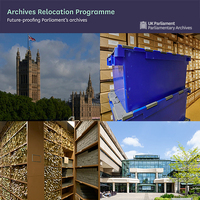
 The move of the Parliamentary Archives collections to The National Archives will bring the records of the executive, legislature and judiciary under one roof for the very first time, whilst also allowing the public, school groups and researchers access to records in more easily accessible and spacious public areas.
-
 Partition Memories Exhibition
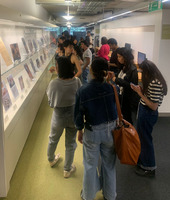
 This blog post reviews the Partition Memories exhibition at SOAS Library
-
 Patrick Trevor-Roper and the decriminalisation of homosexuality
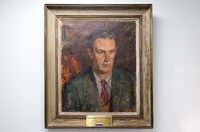
 Patrick Trevor-Roper (1916-2004), was a successful eye surgeon whose appearance in front of the Wolfenden Committee helped decriminalise homosexuality.