-
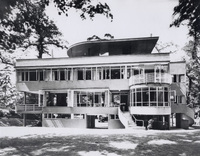 Dennis Sharp Archive : Concrete and Controversy, the architecture of Connell, Ward & Lucas
 Dennis Sharp (1933-2010) was an architect, designer, author and teacher. The Centre holds Sharp’s archive, which comprises material compiled in the course of his research on the architecture of Connell, Ward and Lucas. The archive is fully catalogued and available for research. This spotlight feature highlights some of the key themes that emerge from the archive and some of the treasures which it contains.
-
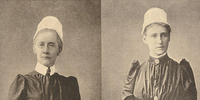 Diana Kimber and Louise Darche: leading lights in New York nursing
 A chance find in a newly catalogued book led to the story of two leading lights in nursing teaching in New York in the late 19th century: women who devoted their lives to their work and to each other.
-
 Discover the groundbreaking multi media exhibition: Our Legacy, Our Home: Club Kali at 30
 In this virtual exhibition we invite you to discover extracts from the materials collected as part of Club Kali’s ‘Where East Meets West’ heritage project: audio and video testimonials, photographic records, archival documents and ephemera, as well as community responses. These materials showcase personal journeys and historical milestones of Club Kali’s 30 years.
The original materials are deposited at Bishopsgate Institute, London, and Islington Heritage as a historical and contemporary resource preserving this rich history for future generations.
The physical Exhibition was launched in August 2025 at Islington Museum, London, UK.
-
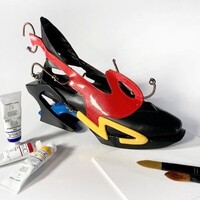 DMU Shoe-perpower: 90 Years of Footwear Design at De Montfort University
 With origins associated with Leicester's booming shoe trade in the nineteenth century, this exhibition explores the evolution of one of DMU's most prestigious courses, celebrating the achievements of its staff and students, past and present.
-
 Durham Cathedral Library
 The collections of Durham Cathedral cover over 1000 years of faith and learning, from the precious books brought by the community of St Cuthbert as they fled Lindisfarne to the very latest publications on history and theology. Our collections include over 300 medieval manuscripts, the most complete surviving monastic archive (featuring three copies of Magna Carta!), early printed books, music, antiquarian collections on the history of North East England, and a huge collection of early medieval carved stones. You can encounter our collections as a library user, by visiting the cathedral and its museum, or meet the manuscripts online at the Priory Library Recreated website.
-
 Eight thought leaders give their views on where AI is taking us
 Against a backdrop of growing concern (and excitement) our industry theme for May 2023, is Artificial Intelligence (AI) and we have been exploring our archives to find out what interviewees have had to say about the technology from their careers and experience from 1960s to the present day.
-
 Exact Editions
 Exact Editions is a digital publishing company based in London. It is a team of producers, developers and designers that turns publications into dynamic, user-friendly digital editions. Exact Editions specialises in digitising content, selling subscriptions and providing streaming solutions across web, iOS and Android platforms. Exact Editions is also the innovator of ‘Reading Rooms’ technology, so publishers can provide streaming, time-limited, access to digital editions.
-
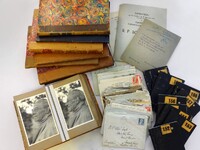 Exploration of the Paul Oppé Library and Archive
 Adolphus Paul Oppé (22 September 1878–29 March 1957) was an art historian and collector with a particular interest in British drawings and watercolours from the eighteenth and early nineteenth centuries. His scholarly work, like his collecting, focused on figures such as John Sell Cotman, Alexander Cozens, Francis Towne, Paul and Thomas Sandby and Thomas Rowlandson, and contributed considerably to establishing their reputations as major British artists.
-
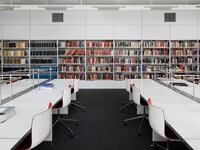 Exploring Berlin as a Cold War City in IWM’s Research Room
 Blog writtern by Annabel Sheen, a second year Collaborative Doctoral Partnership (CDP) PhD student at Imperial War Museums and the University of Bristol, who details her experience using the museum’s Research Room and archive.
-
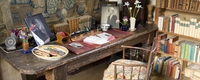 Exploring LGBTQ+ Histories at National Trust Places
 LGBTQ+ people and their stories are an important part of the history of the nation. Learn about some of the places we care for that have been shaped by or were home to people whose gender and sexuality was outside the wider society's conventional ideas of the time.
-
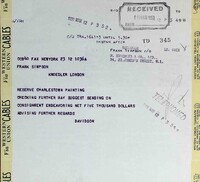 Exploring the Frank Simpson Archive
 Frank Simpson (1911–2002) was a Librarian and amateur art historian with a long-held interest in taste and the collecting of pictures in England in the eighteenth century, particularly from salerooms. The Paul Mellon Centre holds his archive, which includes records from the London office of M. Knoedler & Co., where he worked during the 1950s–1970s. Much of the material in this archive is unique and contains a wealth of information for those interested in the study of provenance, and collections and collecting during the eighteenth to twentieth centuries.
-
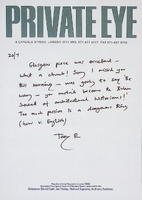 Exploring the Gavin Stamp Archive
 Gavin Stamp (1948–2017) was a British architectural historian, writer and campaigner. His archive, which is held by the Centre, illustrates a prolific career and wide-ranging interests. It includes material related to the Scott family architectural dynasty; inter-war period architecture; telephone boxes; war memorials; power stations; Victorian churches; ecclesiastical design; and colonial architecture.
-
 Exposure and Contrast exhibition now open!
 Head curator, Indy Bhullar talk about the current exhibition
-
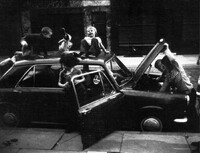 Exposure and Contrast: The Exit Photography Group
 LSE Library’s Autumn/Winter exhibition derives from a collection of photographs and interviews held in the archives. The group responsible for this collection were called Exit and they came together in the 1970s to bear witness to the changes and challenges impacting Britain’s inner cities. 30,000 photos and 100 hours of interviews were edited down and released in the book ‘Survival Programmes: In Britain’s Inner Cities’ published in 1982 by Open University Press.
-
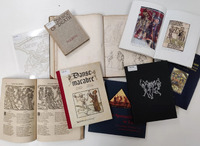 Exquisite Corpse: How did corpses become beautiful? An iconographic wild ride from the danse macabre to Corpse Bride.
 This post was written by Lena Szalewska and Arianna Dalla Costa, Graduate Library Trainees at The Warburg Institute Library, for History Day 2024.
-
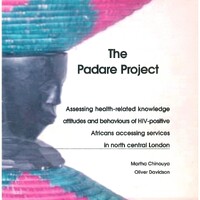 Fakoya collection
 This collection contains studies, reports and campaign material relating to the UK African diaspora and HIV awareness and prevention, sexual health issues and community awareness, c. 1996-2014.
The material was collected by Ibidun Fakoya when she worked as part of MESH (Migration, Ethnicity & Sexual Health programme) at University College London. The collection is linked to SIGMA, as SIGMA continued to evaluate the programme after 2009.
-
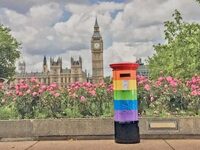 Fifty Years of Innocence
 In 2017, 55 years after the decriminalisation of homosexuality, we looked at the Post Office's records.
-
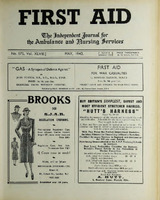 First Aid Journal
 First Aid began in 1895 and was an independent monthly magazine for the ambulance and nursing services (comprised of members of St John Ambulance, the British Red Cross Society, and St Andrew’s Association). These volumes were digitised through a generous financial donation from the St John Historical society. Some items reflect the language and values of their period, and may contain offensive or discriminatory language, terminology, and images or illustrations that may be upsetting for other reasons. Where possible, we will indicate the existence of this material so that our users are informed. Please note that the issue for 1907 is missing.
-
 FLA: Feminist and Women's Libraries and Archives Network
 FLA (Feminist and Women’s Libraries and Archives) Network builds connections, knowledge, and solidarity between an increasing number of libraries and archives which hold material dedicated to feminists and women, their lives, and histories.
-
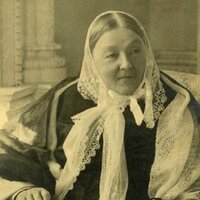 Florence Nightingale and hospital design
 This exhibition highlights the impact of Florence Nightingale upon the design of hospitals and nurses’ training.
-
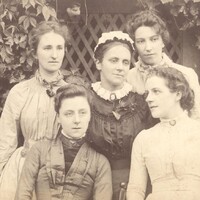 For What Reasons the Murder Was Done: the Destruction of Constance Maynard's Diaries
 A detailed look at the deposit file of Constance Louisa Maynard papers, the first principal of Westfield College and a queer woman, and what it reveals about what is missing from the collection.
-
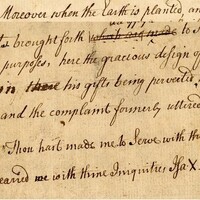 Friends Historical Library of Swarthmore College
 The mission of the Friends Historical Library of Swarthmore College is to collect, preserve, and promote the use of materials that document the history of the Religious Society of Friends (Quakers), its members and attenders, and its principles and connections.
Besides the obvious focus on Quaker history, the holdings are a significant research collection for
• Regional and local history of the middle-Atlantic region of the United States and the history of American social reform
• Abolition
• African-American history
• Indigenous rights
• Women’s rights
• Prison reform
• Humane treatment of people with mental illness
• Temperance
• The significant role Friends played in the development of science, technology, education, and business in Britain and America
-
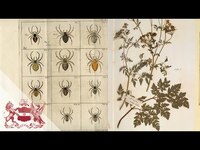 From 15th Century to Today: How to Find Treasures in Linnean Collections
 Head of Collections, Isabelle Charmantier, and Librarian Will Beharrell explain how to navigate the Linnean Collections
-
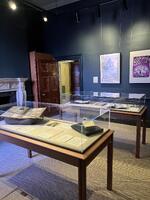 From Black and White to Colour: Staff Selections from the Paul Mellon Centre's Archives & Library Collections
 This display featured material from across the Archives & Library collections at the Paul Mellon Centre. It demonstrated how various histories of British art and architecture can be told through the unique and sometimes unexpected items held here. The material was selected by staff working in the department and included objects chosen because they are particularly inspiring, unusual, illustrative or hold personal resonance.
-
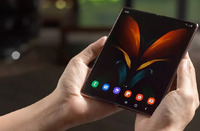 From bricks to bendables: 40 years of Mobile Phones
 It’s been 40 years since the first mobile phones went on sale in the UK and the first networks to support them were built, and in the words of Ben Wood, founder of the Mobile Phone Museum and Chief Analyst at CCS Insight: “No other invention in recent memory has shaped how we live more fundamentally than the mobile phone.”