-
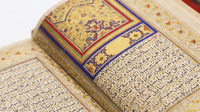 Special Collections at the Institute of Ismaili Studies
 This post is from the Ismaili Special Collections Unit at The Institute of Ismaili Studies (IIS) for History Day 2024.
In celebration of History Day, we explore blogs, podcasts and videos, most of which were created by ISCU (Ismaili Special Collections Unit) team members in 2024.
-
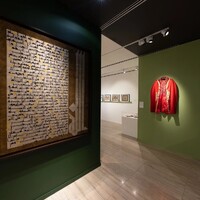 Special Collections at the Institute of Ismaili Studies
 In celebration of History Day, we explore photo-galleries, upcoming conferences, podcasts, articles and exhibitions which were created by ISCU (Ismaili Special Collections Unit) team members in 2025.
-
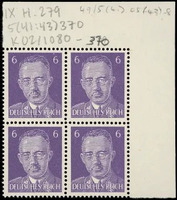 Spies, Lies and Deception through the lens of the IWM Library collection
 This blog post was written by Jane Rosen and Dominic Hewett, Research Support Librarians at IWM London, for History Day 2023 and explores library material relating to the IWM’s exhibition Spies, Lies and Deception (October 2023-April 2024).
-
 Spoonful of sugar: hospital food and medicine
 This online exhibition explores the history of hospital food and medicine
-
 StoneCrabs Theatre - Out On An Island
 StoneCrabs is an LGBT+ led theatre and arts organisation committed to bringing hidden stories to light. Out On An Island is our ongoing, award-winning heritage and oral history project uncovering a century of hidden LGBTQ+ life on the Isle of Wight. Led by Artistic Director Franko Figueiredo and Project Manager Caroline Diamond, it brings together volunteers, artists, and researchers to record stories of LGBT+ Islanders and their experiences of belonging in a small rural community.
Since launching in 2019, the project has produced exhibitions, films, performances, and the book Out On An Island: The Isle of Wight’s Hidden LGBTQ+ History. Working with museums, schools, and archives, it preserves LGBTQ+ voices for future generations.
Its latest creative phase, Faces + Places, created in collaboration with the Queer Heritage and Collections Network and supported by the National Lottery through Arts Council England, transforms research into live, site-specific performed walks. Inspired by the Isle of Wight LGBTQ+ Heritage Trail Map, designed with Spike Spondike, the project exists as live performance, audio podcast, and film, inviting audiences on self-led journeys through local, literary, and queer heritage featuring figures such as Virginia Woolf, Charlotte Mew, Oscar Wilde, the Ferguson’s Gang, and Swinburne.
-
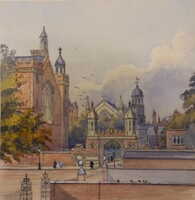 Stories from Lincoln’s Inn Fields: The Flower Family
 This blog is a short story of the influential Flowers and their strong connection to the Royal College of Surgeons of England.
-
 Stories of the Internet from the pioneers who made it happen
 Looking through our archive we can map many of the internet’s significant developments from initial ideas to tests as well as its commercialisation, initial uses and benefits and risks to society.
Pioneers Vint Cerf, Peter Kirstein and Jim Norton have all been recorded by AIT about their work on packet switching and the emergence of the internet and A Michael Noll on its commercialisation. We also have interviews with internet entrepreneur Eva Pascoe, who encapsulates the pioneering spirit of the first internet teachers and users and with Professor Bill Dutton, who was the founding director of the Oxford Internet Institute, a research centre focusing on the societal opportunities and challenges posed by the internet.
-
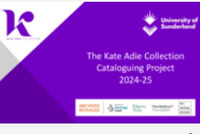 Storytelling from the Kate Adie Collection - University of Sunderland
 The Kate Adie Collection has now been catalogued as a result of funding from Archives Revealed. This has allowed us to discover, uncover and tell the story of Kate's career in journalism, witnessing and reporting from some of the key global events of the second half of the twentieth century. The stories Kate uncovered and which her archive tells are already inspiring research, community projects and interest in archives and recent history.
-
 Teesside Archives
 Teesside Archives collects, catalogues and preserves records and documents relating to the areas of Middlesbrough, Stockton, Hartlepool, and Redcar & Cleveland, and makes them accessible for research.
-
 Ten Minute Talk & Tea: A Short History of Diabetic Healthcare
 Join our Visitor Welcome Assistant Mel as she gives a ten minute talk about the history of diabetic healthcare.
-
 Ten Minute Talk & Tea: International Nurses Day
 Our Archivist Sophie Denman gave a ten minute talk for International Nurses Day.
The talk discusses nurse training in St John Ambulance and focuses on some of the prominent figures in St John Ambulance’s nursing History.
-
 Ten Minute Talk & Tea: Mine's a Pint of Ale: The History of Drinking at St John's Gate
 Our Events & Partnership Lead Zachariah Young gave a ten minute talk on the history of Drinking at St John's Gate.
The Talk starts in the Medieval Period and brewing in the priory and goes all the way to the modern day iteration of the Jerusalem Tavern.
-
 Ten Minute Talk & Tea: Missal-aneous Facts
 Join our Collections and Engagement Officer Rachel as she gives a ten minute talk about one of the Museum's most prized objects - the Rhodes Missal.
The talk discusses the history of the missal, how it was used, where it came from, and why it is still important to the Order of St John Today.
-
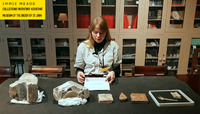 Ten Minute Talk & Tea: Trowel and Error - The Archaeology of the Priory of St John & St John’s Gate
 In this talk, our Collections Inventory Assistant Immie Meade shares some of the archaeological objects that have been found at the Priory of St John and St John’s Gate in Clerkenwell, including a closer look at objects which are normally not on display at our museum!
-
 Texts, Scribes and Transmission: Manuscript Cultures of the Ismaili Communities and Beyond
 This open access volume brings together studies offering insights on different aspects of manuscript cultures nurtured by Ismaili communities until well after the widespread dissemination of printed books.
-
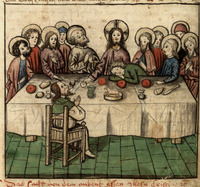 The Act of (Not) Eating in the Middle Ages
 This blog post was written by Maisie Brewster, one of the Library Graduate Trainees at the Warburg Institute Library, for History Day 2023 and explores library material relating eating in the Middle Ages.
-
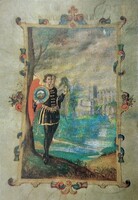 The Afterlife of Alchemy in the Warburg Institute Library’s Collection
 This blog explores the iconography of the ‘hermaphrodite’ from its origin in classical myth, to the alchemical works of medieval and early modern Europe.
-
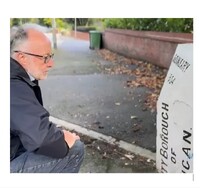 The Barbarous Murder of Wigan Lane: A Story of Victorian Crime and Punishment
 The Church of St Wilfrid in Market Place, Standish, is the starting point of the discovery of a 'barbarous murder' in 1840. Local historian Jim Meehan shares what he's uncovered.
-
 The British Library (Contemporary Archives and Manuscripts)
 The Contemporary British Archives and Manuscripts department of the British Library is responsible for archives and manuscripts collections spanning approximately 1950 to the present day, including both analogue (paper) and born digital records.
We aim, through our collecting, to document the social, political and cultural landscape of post-war Britain. Our collections fall into two areas: Literary and Creative, and Politics, Science and Society. The Politics, Science and Society team will be present at History Day.
-
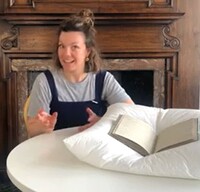 The Diary of a Regency-Era Governess
 Ellen Weeton (1776-1850) was born and raised in Upholland, near Wigan and later worked as a school-mistress and governess. She was the author of one of the most remarkable accounts of a woman’s life from the regency period, and we keep her diary at Archives: Wigan & Leigh. Here, Rosie shares some stories from her dramatic life.
-
 The Digital Archive of the International Bomber Command Centre
 The IBCC Digital Archive is an extensive repository of the personal stories of those who served and suffered during WWII, including personal memorabilia and one of the biggest collections of eyewitness testimonies.
-
 The Egypt Exploration Society
 We are the UK’s leading charity and British International Research Institute supporting and promoting Egyptian cultural heritage since our founding in 1882. Today, we facilitate research projects around the world from our offices in London and Cairo, including access to our unique collections. The Society relies almost entirely on donations from our international membership and the wider public to fund our work and run an extensive educational programme of publications and training, as well as events to convey the results to interested audiences.
Our mission is to support and promote Egyptian cultural heritage, because we envisage a world where the cultural heritage of Egypt is preserved for posterity.
-
 The Evolution debate through the RCS England Library
 The Library holds various published materials that bear witness to the evolution debate of the second half of the 19th century. Some of the protagonists of this mental and moral battle were fellows, while the College constituted a focal point for scientific and intellectual circles.
-
 The Forgotten Voices of Indian Women in the War
 This video provides a brief introduction to the important, but overlooked, role that Indian women played during the Second World War.
-
 The Gardens Trust
 The Gardens Trust is the only UK national charity dedicated to protecting and conserving our heritage of designed landscapes. We campaign on their behalf, undertake research and conservation work, and encourage public appreciation and involvement. Through the national network of County and Country Garden Trusts, we have access to people and local expertise throughout the country.