-
Title
-
Typographical Antiquities
-
Heading
-
Pioneering the Patriot
-
Description
-
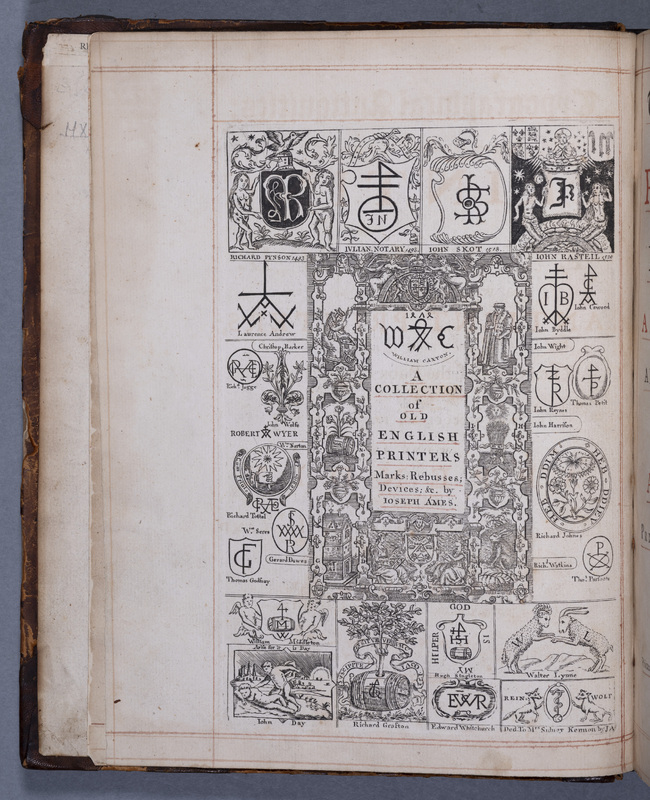
William Caxton remained a nonentity for almost 300 years after his death. Attention was drawn to him by Conyers Middleton’s 29-page Dissertation concerning the Origin of Printing in England (1735) and John Lewis’s biography of Caxton of 1737. Typographical Antiquities (1749), by the antiquary Joseph Ames (1689-1759), was a seminal record of printing in England and Caxton’s place in it. Ames covered English printing up until 1600. He devoted far more space to Caxton (75 pages) than to any other printer discussed. Ames listed Caxton’s books and transcribed his prologues and epilogues. Importantly, he was the first bibliographer to reproduce Caxton’s typefaces and to date books by the type used.
Ames emphasised print as a means of communication. He followed Reformation authors in describing printing as a ‘divine art’, pointing out the prohibitive prices of books before the printing revolution. He further wrote about the changes printing brought about:
"And I am perswaded, if any one would be at the trouble to compare the present body of our people, in regard to literature and their capacities in affairs, with those of our ancestors, who flourished 300 years ago, when there was no printing, they will readily acknowledge, that this curious art hath not a little contributed to the benefit and improvement of mankind."
Caxton emerges as a patriot, who practised printing abroad and brought it to England, "being desirous of his country’s good’"
-
Author
-
Joseph Ames
-
Place of Publication
-
London
-
Publisher
-
W. Faden
-
Date of Publication
-
1749
-
Format
-
4to
-
Century
-
18th
-
Illustrations
-
Engraving
 A National Hero