A Thousand Words for Weather
Alongside the audio installation A Thousand Words for Weather, the exhibition 'Weather Notes' of historical items chosen from Senate House Library’s collections offers a glimpse into different perceptions, recordings, and observations regarding the weather over the past 500 years.
Click on each image to view the item in more details.
Weather in the Making
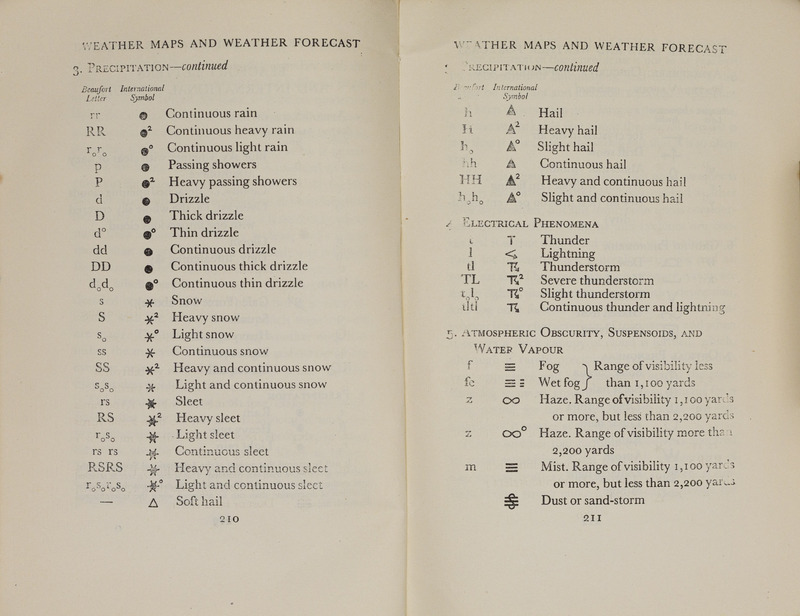
“Weather is nothing more or less than the atmosphere in its varying moods” claims this book’s author. How do you then capture and predict moods? From the 1830s onwards the telegraph allowed weather forecasting to transcend locality. A newly created global network of weather stations required a common language to transfer information. Following a similar development to digital symbols such as emoticons, weather symbols used typographic rather than alphabetic elements to overcome the challenge of international communication in multiple languages.
As this table shows, a dot represents rain and an asterisk suggests snow.
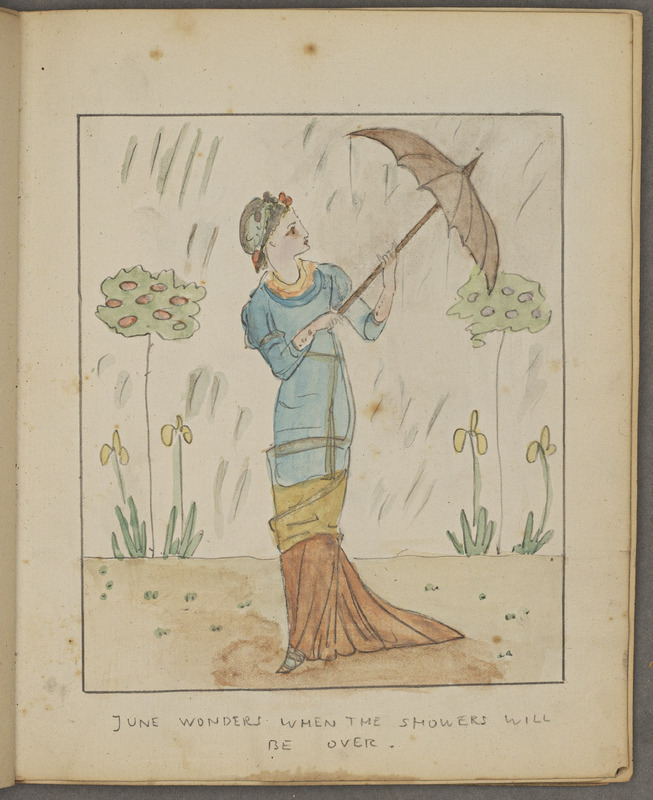
Beatrice Crane Her Book
Artist and children’s book creator Walter Crane illustrated this book for his daughter Beatrice to tell the story of seasonal weather changes from April to June and their effects on plants. Seasons reveal weather’s ties to time hidden in many words for weather: Greek kairos means season, good timing, a decisive moment and Italian tempo, Spanish tiempo and French temps mean both weather and time.
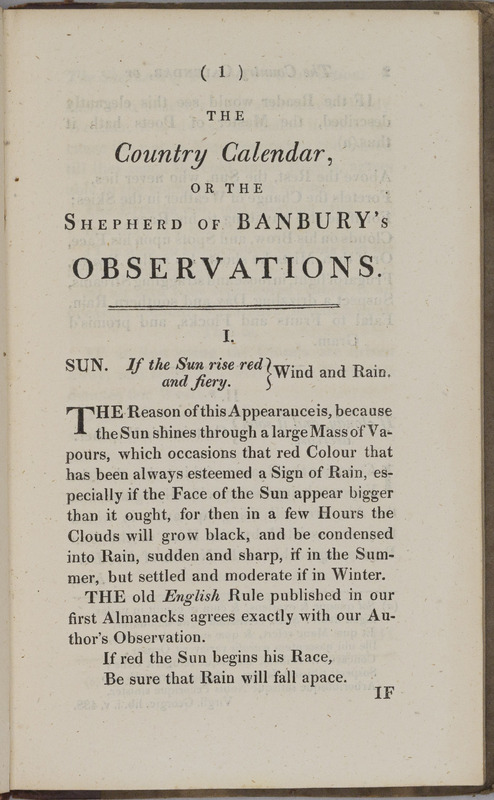
A Selection of Weather Signs
Weather is fundamentally tied to local knowledge and woven into local tradition. Weather signs gave people ways to read their county’s natural geography such as: ‘If the mist ascends out of the valleys to the hill-tops it is a sign of rain’. These sayings were collected by the prominent collector of Welsh folklore Reverend Elias Owen and later reprinted by the Gregynog Press (Gwasg Gregynog) in Tregynon, Wales. The Press was founded by the sisters Gwendoline and Margaret Davies to produce artistic prints using traditional skills to celebrate Welsh culture.

The Newest, Best, and Very-much Esteemed Book of Knowledge
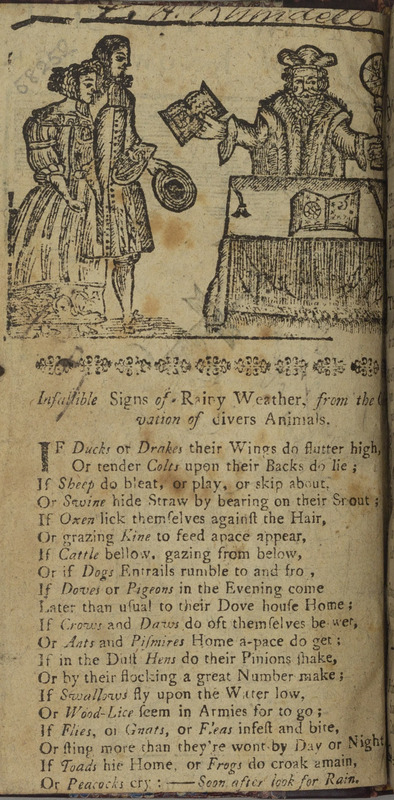
The weather is an important influence on everyday life, including agriculture and trade. This is why instructions about how to predict weather were highly valued. Advice on weather prediction was published in educational and instructional manuals. Although this book sells itself as the ‘newest’ and ‘best’ and includes references to Francis Bacon, it is still steeped in weatherlore. It lists how different animal behaviours can indicate the arrival of certain types of weather.
Sketch Book of Harriet Lewin (i)
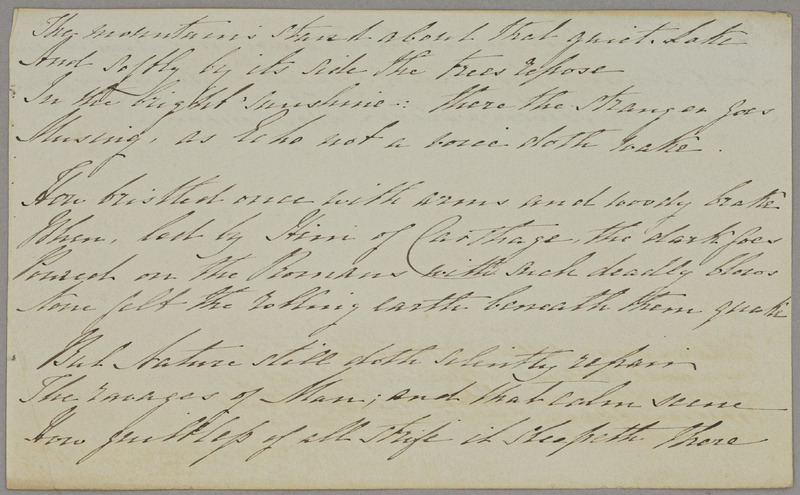
A day with “bright sunshine” evokes the memory of the battle of Lake Trasimene near the town of Ossaia in Umbria, Italy, between Hannibal’s Carthaginian forces and the Roman army on a summer day in 217 BC. Daughter of Thomas H. Lewin, lieutenant in colonial India, and later wife of MP George Grote, Harriet Lewin, an influential political radical activist in 1830s Britain, notes how landscapes can prompt reflection on historical events, making them part of our own memories. Initial research suggests that human memory is affected differently by certain types of weather.

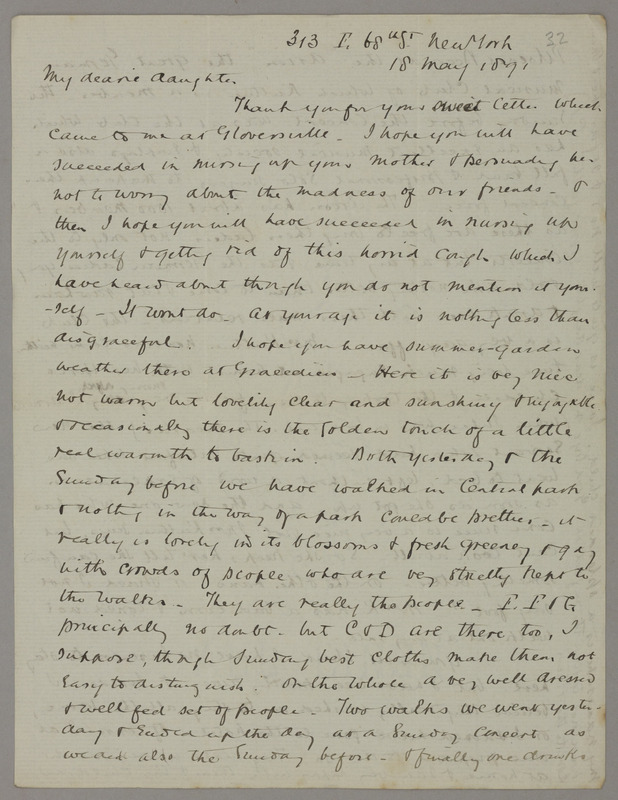
Sketch Book of Harriet Lewin (ii)
Chronicling journeys made throughout Britain and Europe, Harriet Lewin uses her sketchbook to write down her impressions and capture an image of the new environments she encountered during her travels. She was the daughter of Thomas H. Lewin, lieutenant in colonial India, later wife of MP George Grote, and became an influential political radical activist in 1830s Britain. Throughout this journal of her early life she notes how landscapes can prompt reflection on historical sites and events, making them part of our own memories. Initial research suggests that human memory is affected differently by certain types of weather.
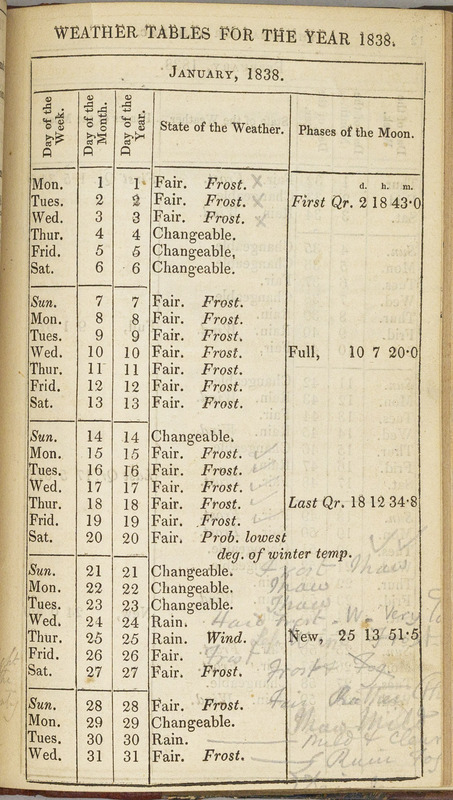
The Weather Almanac for the Year 1838
Almanacs were one of the biggest mass market products of their time. They are annual publications with information on subjects of daily use to their readers. In 1838 Murphy’s Weather Almanac correctly predicted that the coldest day of the year would fall on 20 January, which made its sales sore. An unknown annotator of this copy has checked its predictions for accuracy. Popular almanacs producing accurate knowledge posed a challenge to elite scientific meteorologists at the time.
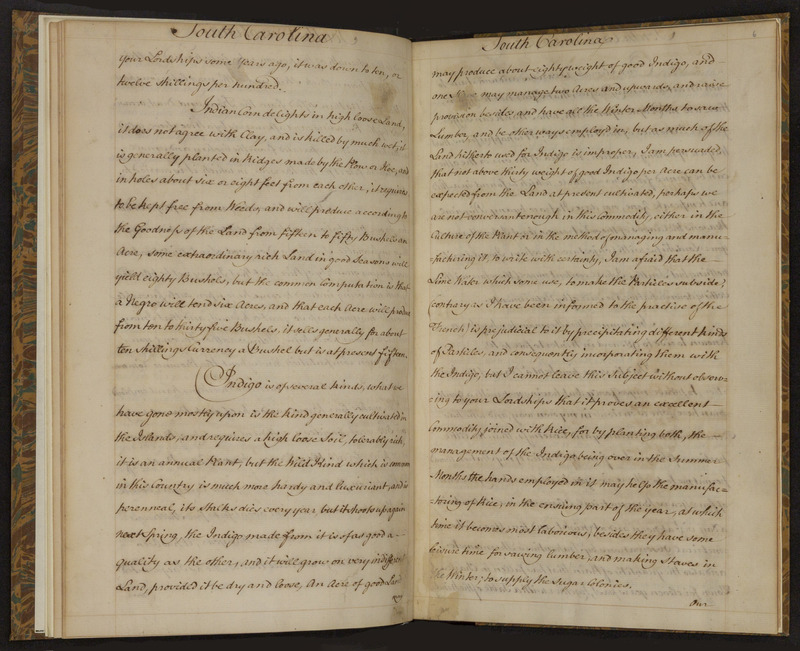
James Glen’s Answers to Queries from the Lords Commissioners for Trade and Plantations about the Colony of South Carolina
British colonial administrators’ reports reveal the relationship between climate, the empire’s economy and enslavement. Here the Governor of South Carolina, James Glen, reports to the Crown’s official organisation monitoring trade in the British colonies’ plantations. He describes indigo and rice as “excellent” export commodities due to the region’s subtropical climate and highlights how these valuable crops are managed to exploit enslaved labourers across seasons in both the American and Caribbean colonies.
Goethes Gedichte, Zweiter Theil
Goethe’s Poetry, Volume 2
Goethe had a keen interest in studying nature and his studies inspired his poetry. He admired Luke Howard’s work for “bestowing form on the formless” and “creating a system of ordered change on a boundless world”. Several of his poems are dedicated to Howard’s cloud classification and one is even written in Howard’s honour (Howards Ehrengedächtnis). The two men also corresponded with each other. Howard sent Goethe a copy of The Climate of London in 1822.

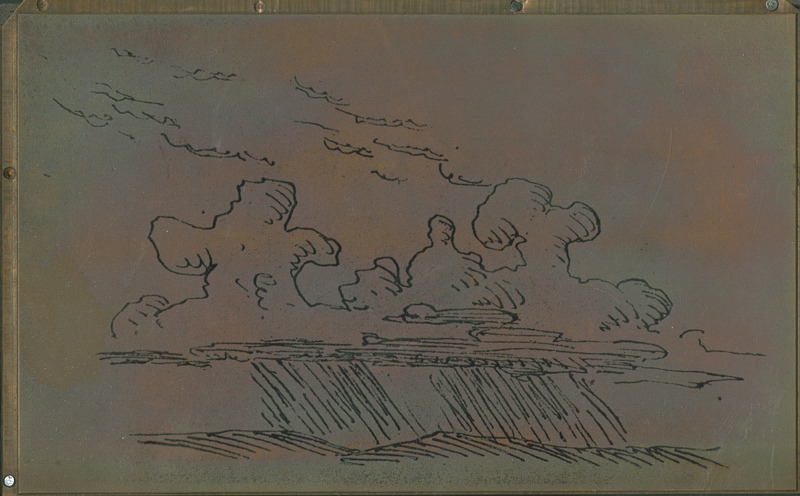
Copper Plate of Illustrations Executed by Goethe
Washed Brush Picture of 'Schwanenwalde' (1779) and Pen-and-Ink Sketch of Clouds (10 May 1816)
Many artists of the Romantic period were fascinated by clouds and inspired to integrate new scientific findings into their art. These copper plates reproduce two cloud sketches by the German poet, philosopher and scientist Johann Wolfgang von Goethe. When he made the first sketch, he still had little scientific knowledge of meteorology. The 1816 sketch shows three types of clouds identified in Luke Howard’s cloud classification, which he had read about during the same year.
Report on the Calcutta Cyclone of the 5th October 1864
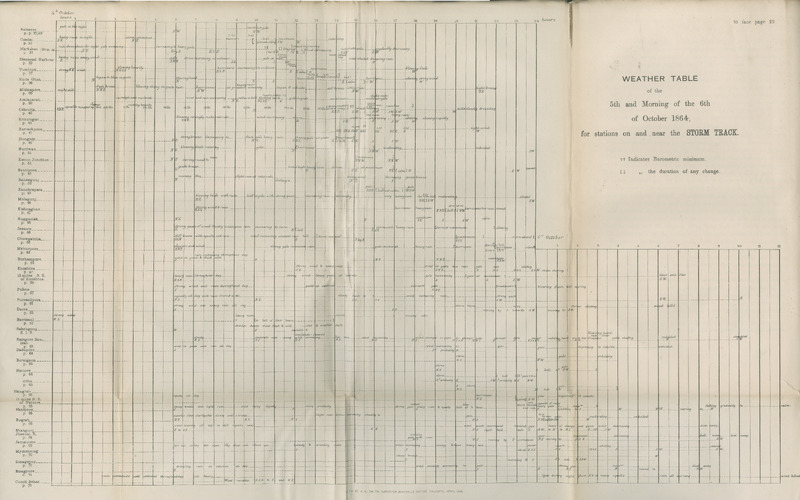
On 5th October 1864, a devastating cyclone destroyed the city of Kolkata (formerly Calcutta) claiming about 50,000 lives. In this report, Gastrell Eardley and Blanford attempted to trace its development through observations from ships and atmospheric pressure data gathered from often unreliable private letters and published accounts as visualised in this table. India was perceived as a perfect observatory of extreme but simplified weather and featured prominently in British meteorology, serving the Empire’s pursuit of ‘universal’ scientific knowledge.
The Storm
On Wednesday 26 November 1703, Daniel Defoe nearly died near his London home when part of a neighbouring house collapsed in a week-long hurricane that hit the south of England and the English Channel. Regarded as the first substantial work of modern journalism, he published this book the following year, after advertising in the London Gazette for eyewitness accounts. In sharp contrast to ‘clinical’ colonial reports of weather disasters, Defoe foregrounds stories of courage, selfishness and suffering by those who experienced the Great Storm.

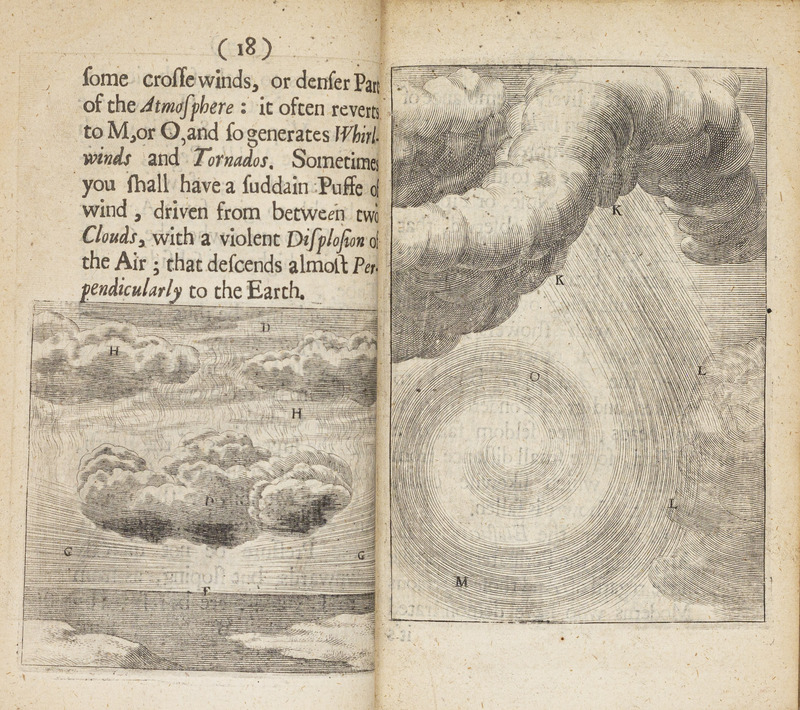
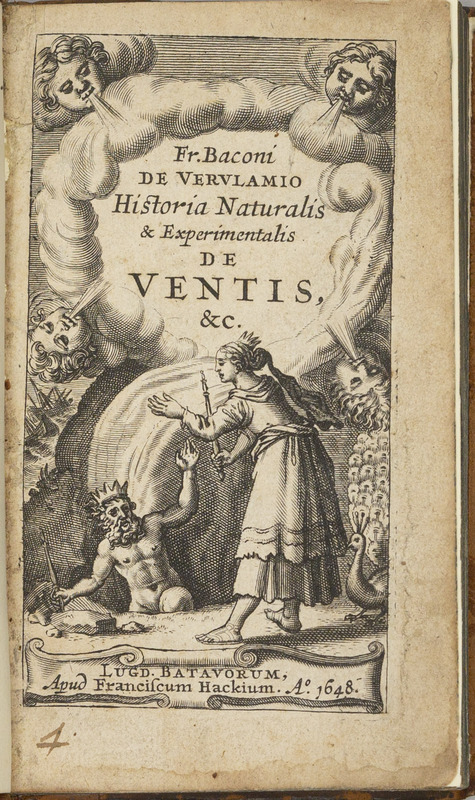
Fr. Baconi de Verulamio Historia Naturalis & Experimentalis de Ventis
Francis Bacon of Verulam’s The Natural and Experimental History of Winds
With overseas expansion and colonisation new data and approaches to studying the weather emerged. Francis Bacon’s Natural and Experimental History of Winds aimed for a new approach to meteorology by forefronting the observation of natural phenomena, analysing how the wind interacts with machinery, such as ships and windmills. The Baconian scientific method sought to create a more functional approach to nature, in which humans can harness the power of the winds for their own gain.
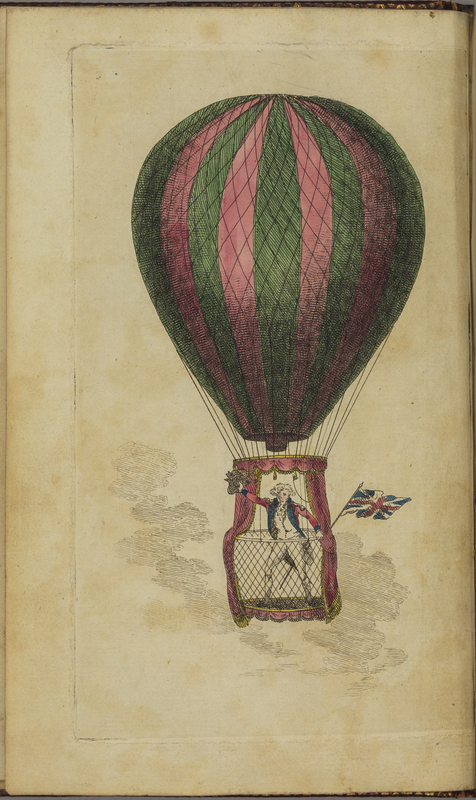
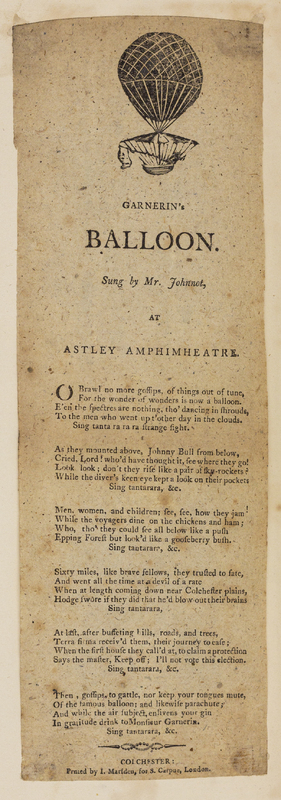
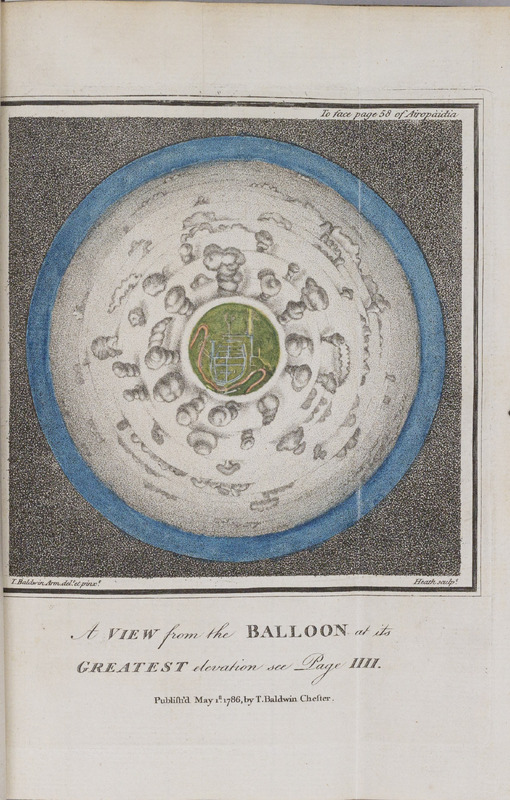
Airopaidia: Containing the Narrative of a Balloon Excursion from Chester, the Eighth of September, 1785
Observing and studying the weather connects humans with their environment. This book traces the balloon voyage of Thomas Baldwin between Chester, Warrington and Rixton-Moss on 8 September 1785. His published account describes the changes in temperature, atmosphere and sensations he experienced. He recounts the joy and awe inspired in him as the balloon brings him closer to the skies: “... what Scenes of Grandeur and Beauty! ...to look down on the unexpected Change already wrought in the Works of Art and Nature, contracted to a Span by the new perspective, diminished almost beyond the Bounds of Credibility”
The Royal Meteorological Society Meteorology in Relation to Health
The Royal Meteorological Society’s participation in the International Health Exhibition of 1884 reaffirmed the understanding of the interrelation of health and weather. Besides weather forecasting, the Society set up 82 climatological stations, as shown in this chart, in order to to understand the health implications of different weather conditions, including moisture levels in English seaside towns. The Society also encouraged public participation by displaying a model of a climatological station on the Exhibition’s grounds for “those desirous of organising a station”.

The Climate of London, Volume 1
The diagram visualises the cycle of temperature variations in London throughout the year. Amateur meteorologist Luke Howard had a life-long fascination with studying the weather. His passion was sparked by the summer haze of 1783, caused by a volcano eruption in Iceland. Based on Howard’s meticulous long-term observations, The Climate of London broke new ground. It was the first study to document the effect of air pollution on urban climate.

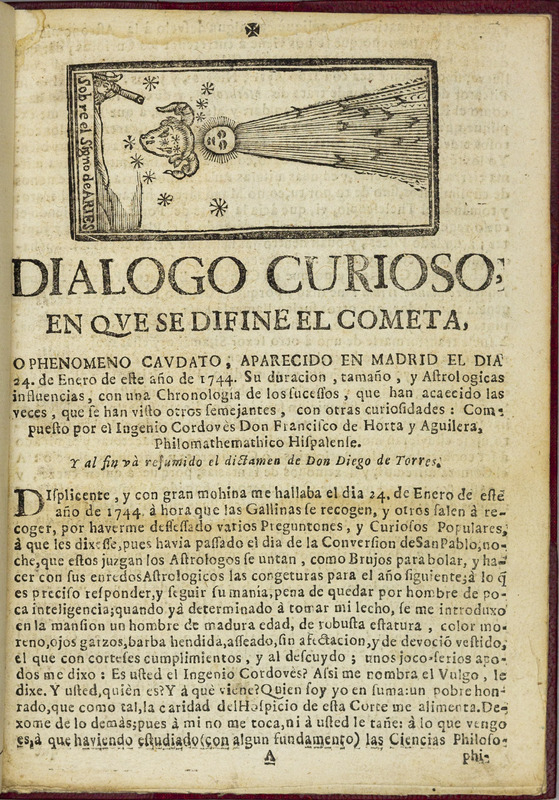
Dialogo Curioso en que se Define el Cometa o Phenomeno Caudato Aparecido en Madrid el dia 24 de Enero de este Año de 1744
Curious Dialogue in which the Comet or Caudate Phenomenon that Appeared in Madrid on 24th January of the year 1744
The term ‘meteorology’ derives from the word ‘meteor’, meaning ‘things that are raised up high’ in ancient Greek. Until the 19th century, meteors were thought of as atmospheric phenomena rather than astronomical ones. This pamphlet reports on the Great Comet of 1744 as viewed from Madrid by the scholar Francisco de Horta y Aguilera. The first meteorologists were interested in extraordinary phenomena tied to a specific location rather than seeking weather patterns.
A General History of the Air
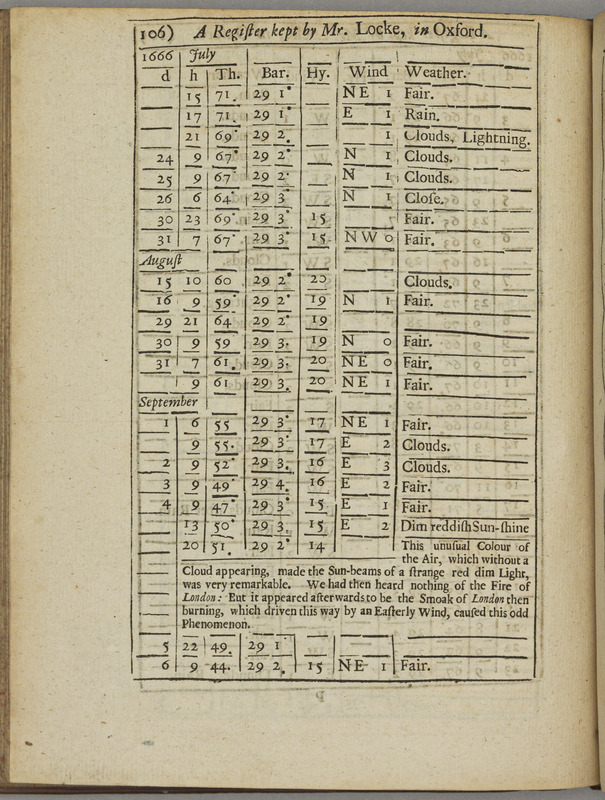
Standardised weather diaries were the answer to weather's elusiveness for the 17th century thinkers who embraced the experimental scientific method according to which data recording and analysis was essential for acquiring knowledge. One of the first modern chemists Robert Boyle persuaded his friend and fellow empiricist philosopher John Locke to start a weather diary in June 1666 with consistent recordings of atmospheric measurements such as temperature and pressure. On 4 September, Locke observed a “dim reddish sunshine” in Oxford, unknowingly describing the effects of the devastating Great Fire of London, which had started two days earlier.
A Prognostication Everlasting of Right Good Effect
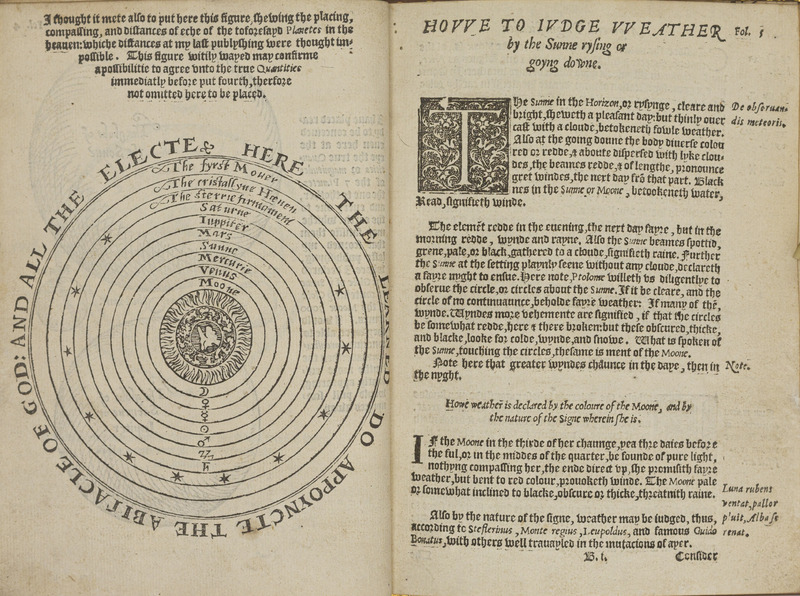
Countless generations have studied the sky to understand and predict the weather. This text by the mathematician Leonard Digges includes ways of forecasting through the planets’ positions and conjunctions. It is an example of ‘astro-meteorology’, which combined contemporary knowledge of astrology, astronomy and weather folklore. Although such thinking was dismissed as magical even by some of its contemporaries, it used table calculations and paper instruments which resembled later scientific methods. Contemporary science accepts that other planets affect the Earth but what that means for the weather is still not entirely understood.
The physical atlas: a series of maps & notes illustrating the geographical distribution of natural phenomena
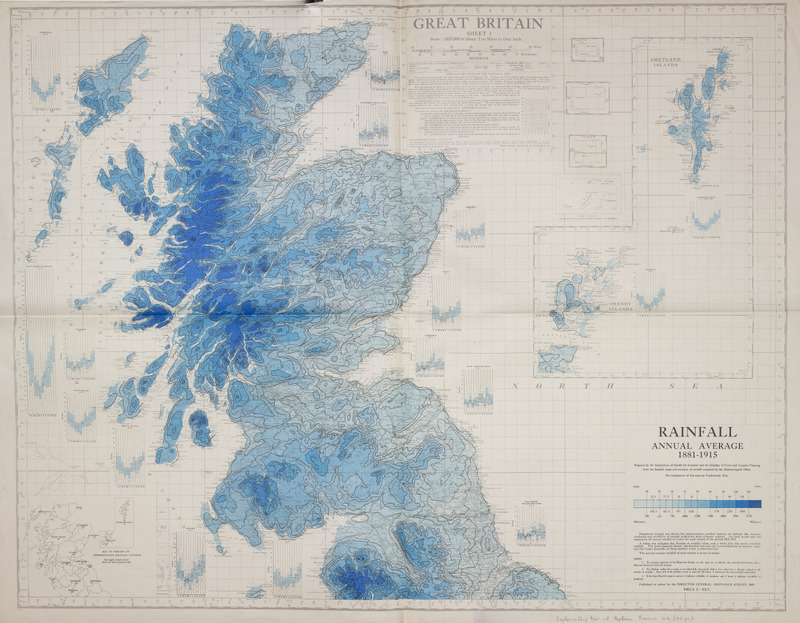
This world map charts the distribution of average temperatures on the Earth’s surface using isothermal lines. Isothermal lines were first proposed by the German naturalist and climatologist, Alexander von Humboldt (1769-1859), and started being used as visual aids by cartographers around the mid-19th century. The explanatory notes accompanying the map state that isothermal lines help illustrate the influence of different temperatures “on vegetation, agriculture, the ripening of fruits, and the material well-being of Man.” Cartographic depictions of the weather merge scientific data with geography assisting in understanding the world’s climate at scale.
The Sailor's Hornbook for the Law of Storms
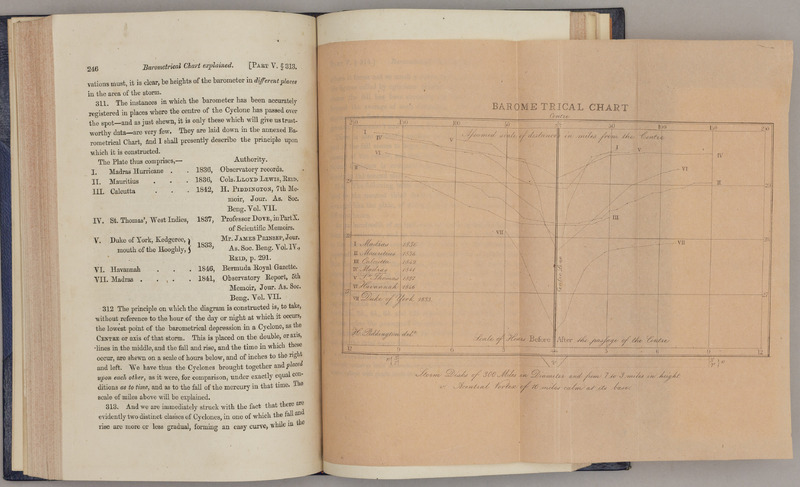
Understanding extreme weather phenomena in the colonies was of national interest to the British Empire. Sea captain and colonial officer in India, Henry Piddington, responded to this need with his hornbook (a title taken from children’s primers) educating sailors in the workings of what he named ‘cyclones’ and offering tools for first-hand data collection. These transparent cards would allow sailors to map a storm’s track based on the wind’s rotation: counter-clockwise in the northern hemisphere and clockwise in the southern.

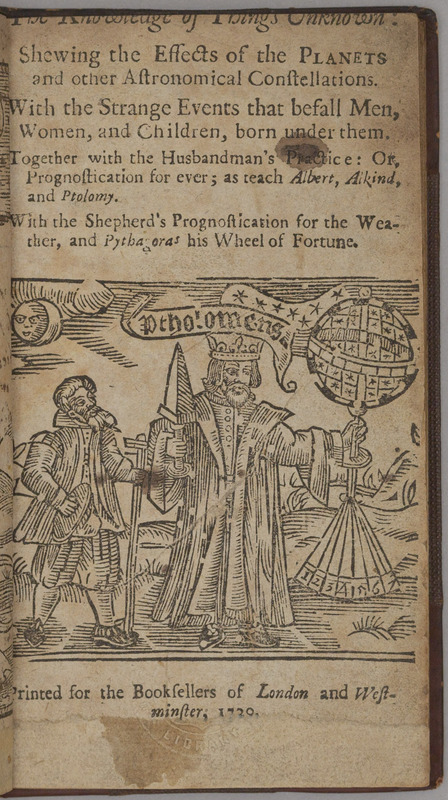
The Knowledge of Things Unknown: shewing the effects of the planets and other astronomical constellations...
Weather lore and knowledge were disseminated in books such as The Knowledge of Things Unknown which has this woodcut image on its title page. It shows a figure looking up for guidance to the ancient Greek scholar Claudius Ptolemy who had a significant impact on mathematical and astronomical thinking in medieval and early modern Europe. The text compiles theories on the origin of different weather phenomena and gives guidance on how its user might “read” them with help of knowledge passed down by “ancient authorities”.
The Weather Book: A Manual of Practical Meteorology
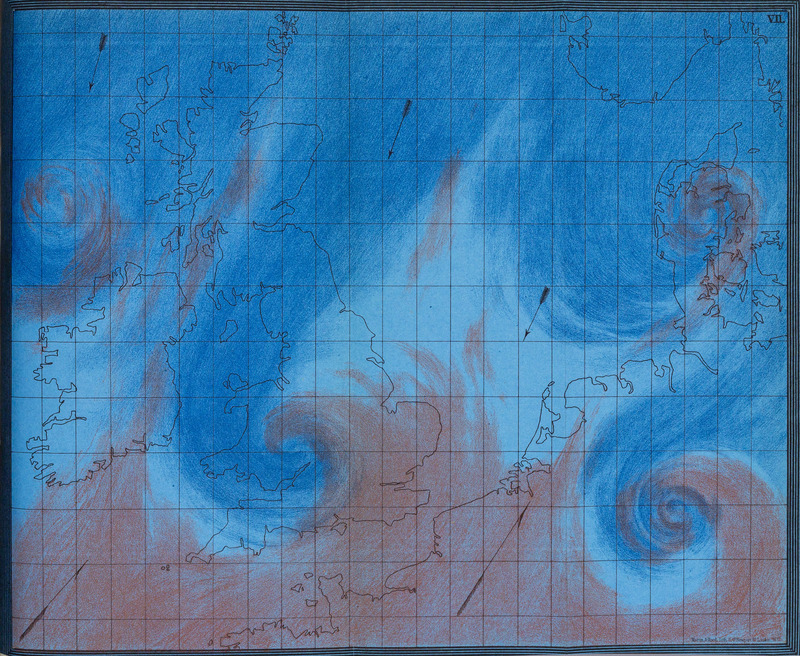
With The Weather Book, Robert Fitzroy created an introduction to meteorology for the everyday Victorian citizen based on up-to-date scientific methodology. Luke Howard’s classification of clouds is included to help readers identify the types of clouds they can observe. The book was part of Fitzroy’s efforts to disseminate new scientific methods to study the weather. He made the weather forecast a daily addition to the newspapers and supported the establishment of what would later become the Meteorological Office.
...and more