The three medallions and the bronze figure here were purchased by collector and ethnologist Alfred Fuller as examples of ‘Billy and Charley’ forgeries. William Smith and Charles Eaton were unemployed and uneducated Victorian Londoners who identified a hunger amongst the middle classes for collecting antiquities, and set about creating them on a considerable scale. While they were widely recognised as forgers in their lifetime, they were not successfully prosecuted. A pleasing irony is that their creations are typically now worth more than equivalent genuine artefacts.
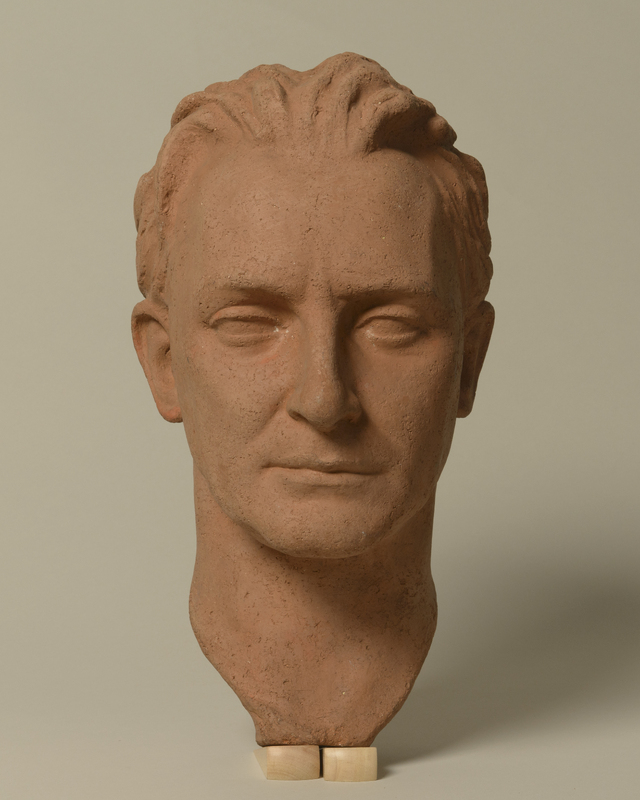
The sculpted head of Friedrich Gundolf, presumed to be by Ludwig Thormaehlen, has an almost uncanny evocation of a living person, while giving the German scholar a classical, heroic cast.
Author Johnston, Alexander Keith, 1804-1871. The physical atlas [cartographic material] : a series of maps & notes illustrating the geographical distribution of natural phenomena / by Alexander Keith Johnston ... based on the Physikalischer Atlas of Professor H. Berghaus, with the co-operation in their several departments of Sir David Brewster ... [et al.]. ImprintEdinburgh ; London : William Blackwood & Sons, 1848. Descript.1 atlas ([6], 34, 16, 10, 34 p., 30 pl.) : ill. (some hand col.), maps (some hand col.) ; 58 cm.
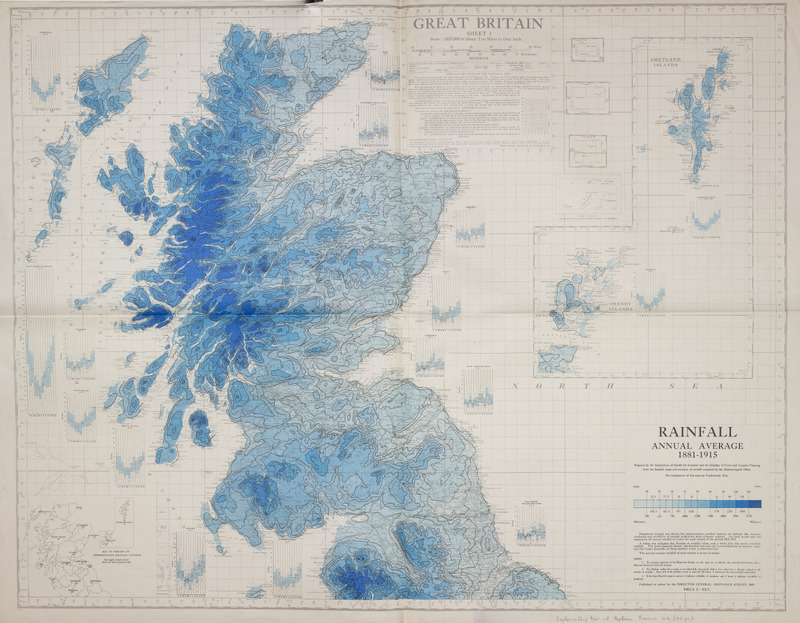
This world map charts the distribution of average temperatures on the Earth’s surface using isothermal lines. Isothermal lines were first proposed by the German naturalist and climatologist, Alexander von Humboldt (1769-1859), and started being used as visual aids by cartographers around the mid-19th century. The explanatory notes accompanying the map state that isothermal lines help illustrate the influence of different temperatures “on vegetation, agriculture, the ripening of fruits, and the material well-being of Man.” Cartographic depictions of the weather merge scientific data with geography assisting in understanding the world’s climate at scale.
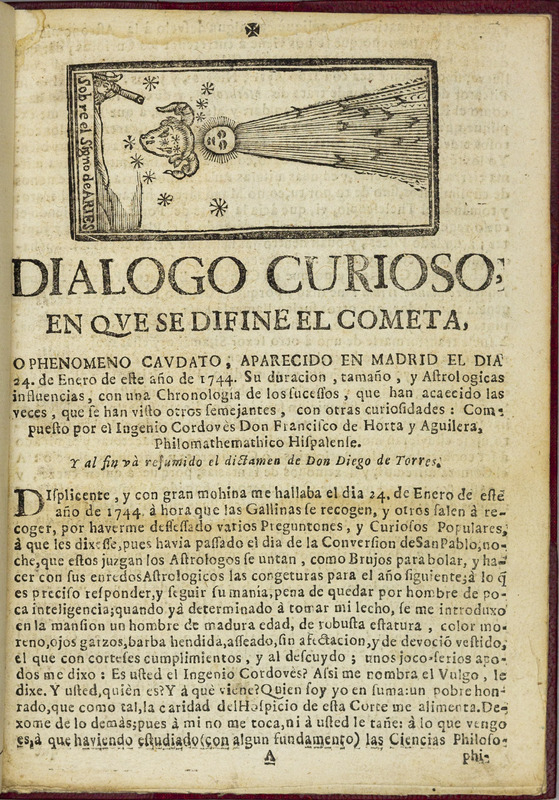
Sold in the bookshop of José Palacios (?) Madrid, c.1744 [E.P.] B/41 The term ‘meteorology’ derives from the word ‘meteor’, meaning ‘things that are raised up high’ in ancient Greek. Until the 19th century, meteors were thought of as atmospheric phenomena rather than astronomical ones. This pamphlet reports on the Great Comet of 1744 as viewed from Madrid by the scholar Francisco de Horta y Aguilera. The first meteorologists were interested in extraordinary phenomena tied to a specific location rather than seeking weather patterns.
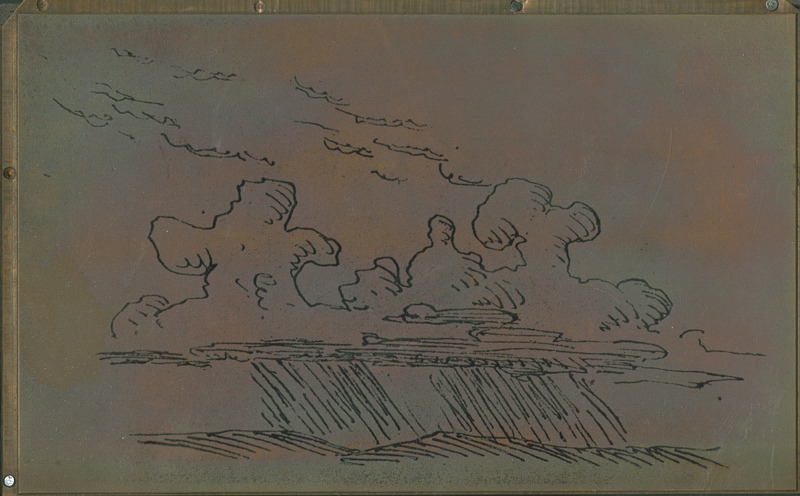
Many artists of the Romantic period were fascinated by clouds and inspired to integrate new scientific findings into their art. These copper plates reproduce two cloud sketches by the German poet, philosopher and scientist Johann Wolfgang von Goethe. When he made the first sketch, he still had little scientific knowledge of meteorology. The 1816 sketch shows three types of clouds identified in Luke Howard’s cloud classification, which he had read about during the same year.
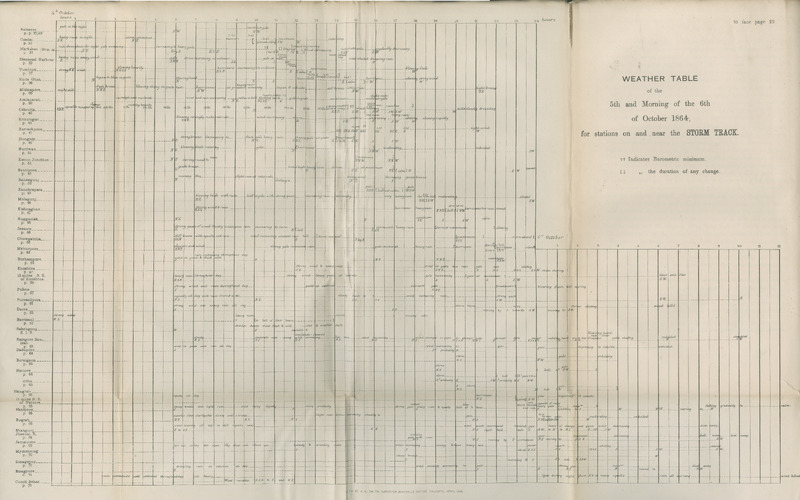
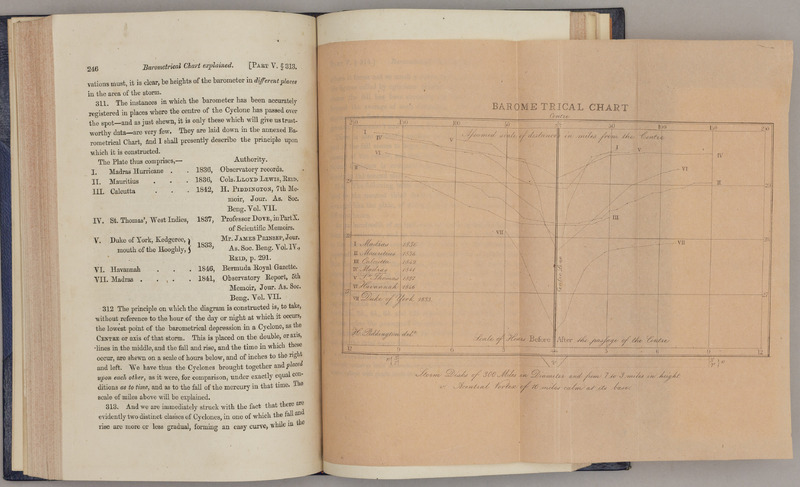
On 5th October 1864, a devastating cyclone destroyed the city of Kolkata (formerly Calcutta) claiming about 50,000 lives. In this report, Gastrell Eardley and Blanford attempted to trace its development through observations from ships and atmospheric pressure data gathered from often unreliable private letters and published accounts as visualised in this table. India was perceived as a perfect observatory of extreme but simplified weather and featured prominently in British meteorology, serving the Empire’s pursuit of ‘universal’ scientific knowledge.
With The Weather Book, Robert Fitzroy created an introduction to meteorology for the everyday Victorian citizen based on up-to-date scientific methodology. Luke Howard’s classification of clouds is included to help readers identify the types of clouds they can observe. The book was part of Fitzroy’s efforts to disseminate new scientific methods to study the weather. He made the weather forecast a daily addition to the newspapers and supported the establishment of what would later become the Meteorological Office.
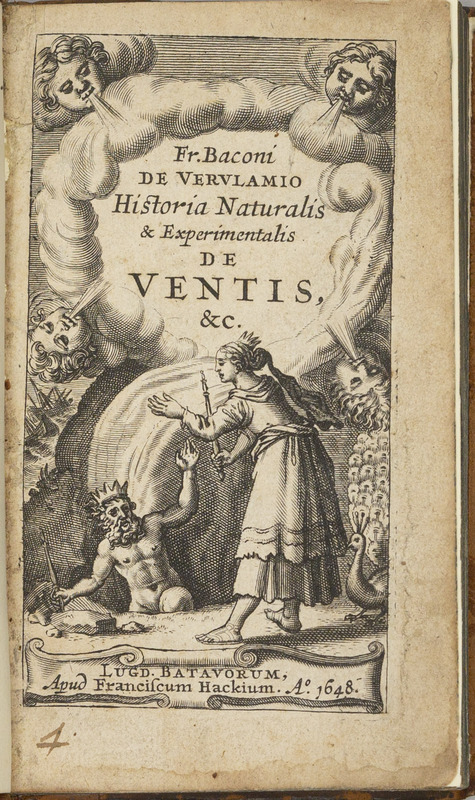
Printed by Franciscus Hackius Leiden, 1648 [B.S.] 95 With overseas expansion and colonisation new data and approaches to studying the weather emerged. Francis Bacon’s Natural and Experimental History of Winds aimed for a new approach to meteorology by forefronting the observation of natural phenomena, analysing how the wind interacts with machinery, such as ships and windmills. The Baconian scientific method sought to create a more functional approach to nature, in which humans can harness the power of the winds for their own gain.
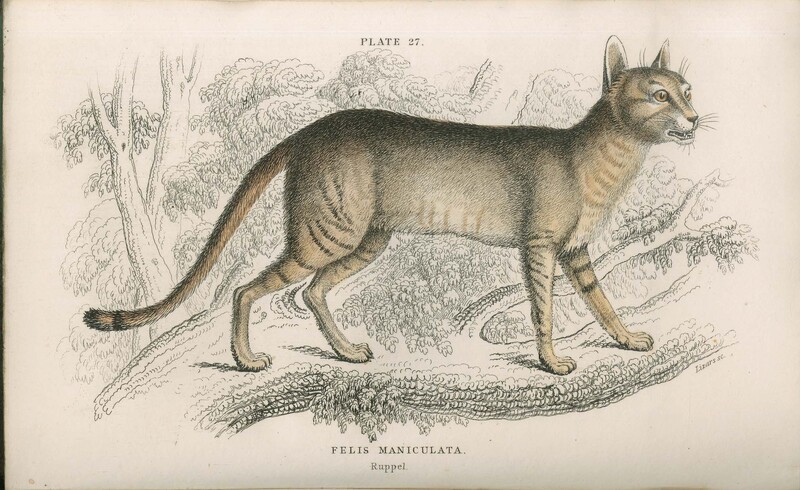
Plate from The natural history of the felinae ... by Sir William Jardine. In the Durning-Lawrence Library, items related to Sir Francis Bacon. According to Ruppel, 'This cat, must in more than one respect, excite the interest of natural philosophers, as there can be no doubt but that from it is descended the domestic cat of the ancient Egyptians' (pages 239-240).
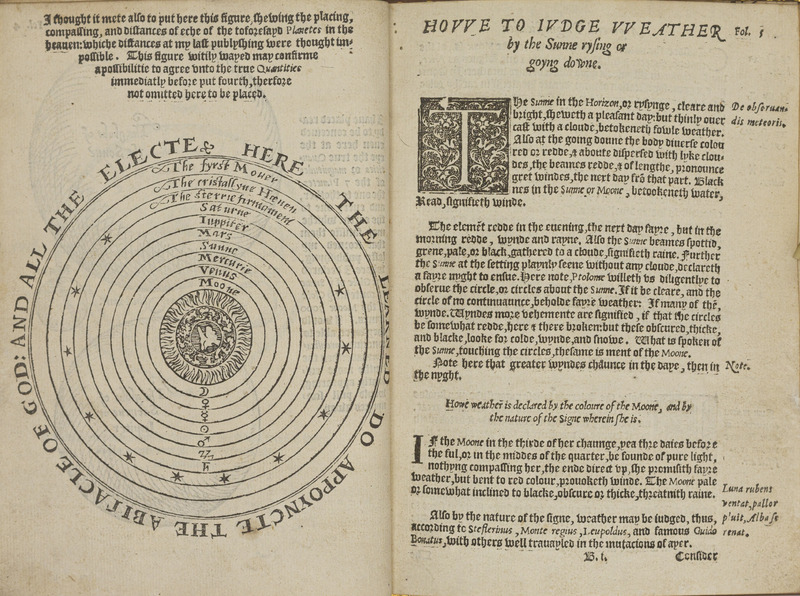
The second impression augmented by the author, printed by Thomas Gemini & Co London, 1556 [D.-L.L.] M⁰ [Digges] SR Countless generations have studied the sky to understand and predict the weather. This text by the mathematician Leonard Digges includes ways of forecasting through the planets’ positions and conjunctions. It is an example of ‘astro-meteorology’, which combined contemporary knowledge of astrology, astronomy and weather folklore. Although such thinking was dismissed as magical even by some of its contemporaries, it used table calculations and paper instruments which resembled later scientific methods. Contemporary science accepts that other planets affect the Earth but what that means for the weather is still not entirely understood.
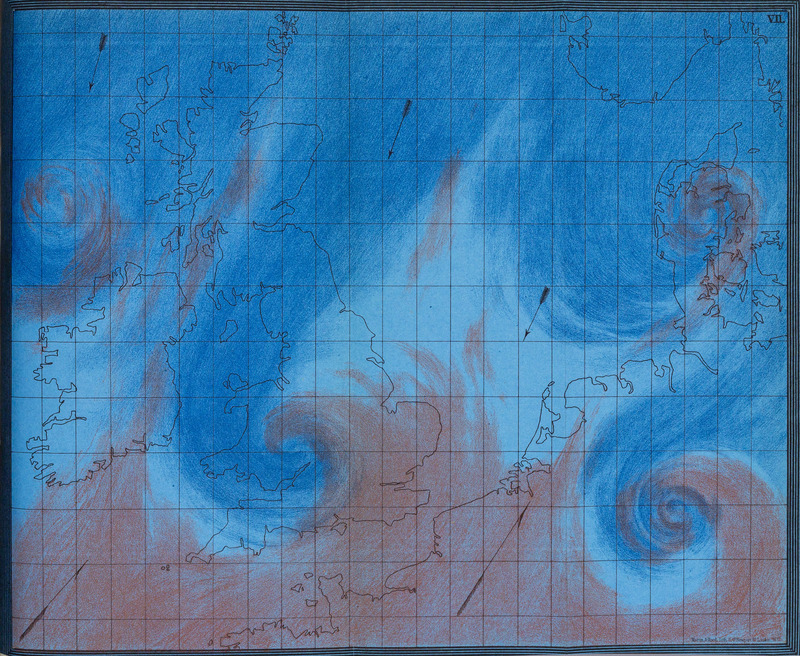
Understanding extreme weather phenomena in the colonies was of national interest to the British Empire. Sea captain and colonial officer in India, Henry Piddington, responded to this need with his hornbook (a title taken from children’s primers) educating sailors in the workings of what he named ‘cyclones’ and offering tools for first-hand data collection. These transparent cards would allow sailors to map a storm’s track based on the wind’s rotation: counter-clockwise in the northern hemisphere and clockwise in the southern.
Understanding extreme weather phenomena in the colonies was of national interest to the British Empire. Sea captain and colonial officer in India, Henry Piddington, responded to this need with his hornbook (a title taken from children’s primers) educating sailors in the workings of what he named ‘cyclones’ and offering tools for first-hand data collection. These transparent cards would allow sailors to map a storm’s track based on the wind’s rotation: counter-clockwise in the northern hemisphere and clockwise in the southern.
Like all images of Shakespeare, this cast of his memorial in Stratford’s Holy Trinity Church is controversial. This particular example lacks much of the detail of the both the original and other casts, and carries on its reverse a spurious anecdote of an illicit casting, attempting to present it as the only true representation.
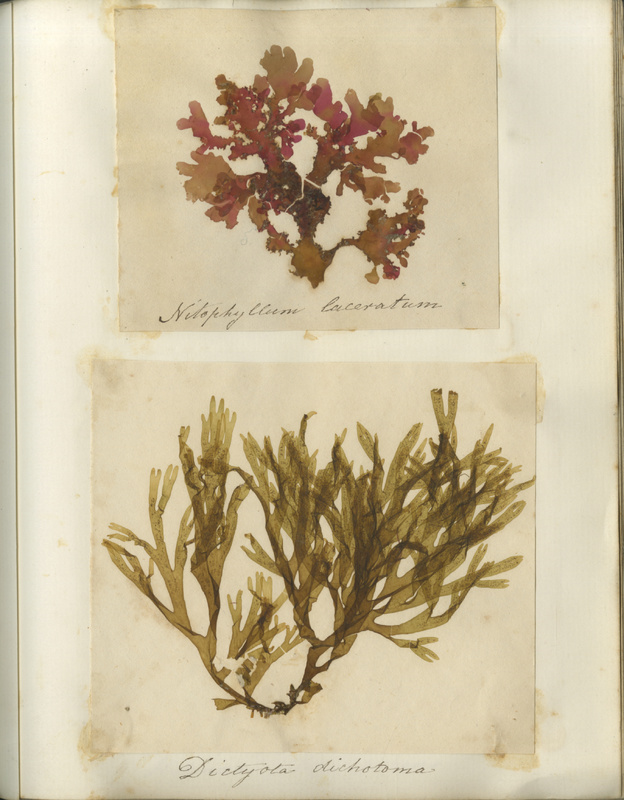
Seaweed sample from Volume entitled ‘British Seaweeds’ containing forty-eight named examples of seaweeds pasted into pages, including note on the inside cover:: 'Collection of Seaweeds sold in aid of the Fund for the repair of Rock Church £1.1.0' (probably compiled by Mrs Gray of the British Museum: see 11) (48pp) (n.d.). To see the full digitised album click on the catalogue link.
1804-1865. Seaweed samples from Volume containing seventy-one named examples of seaweeds pasted into pages, including note on the inside cover:: 'Presented by Mrs Gray (wife of Dr JE Gray) of the Brit[ish] Mus[eum]' (42pp) (1804 – 1865). To see the full digitised album click on the catalogue link.
Seaweed samples from Volume containing seventy-one named examples of seaweeds pasted into pages, including note on the inside cover:: 'Presented by Mrs Gray (wife of Dr JE Gray) of the Brit[ish] Mus[eum]' (42pp) (1804 – 1865). To see the full digitised album click on the catalogue link.
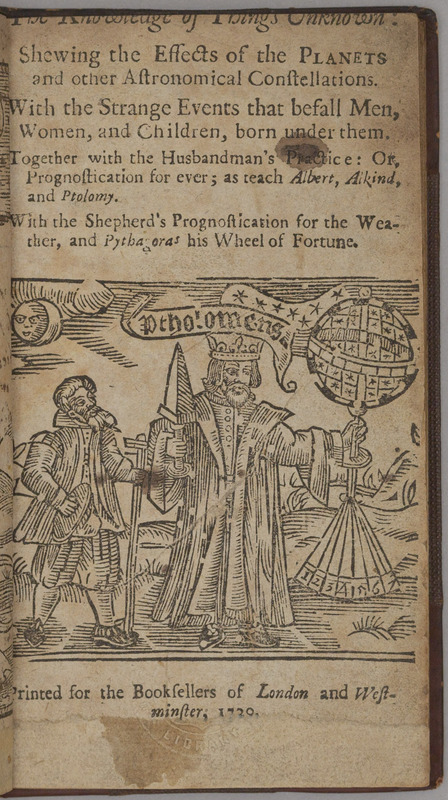
Weather lore and knowledge were disseminated in books such as The Knowledge of Things Unknown which has this woodcut image on its title page. It shows a figure looking up for guidance to the ancient Greek scholar Claudius Ptolemy who had a significant impact on mathematical and astronomical thinking in medieval and early modern Europe. The text compiles theories on the origin of different weather phenomena and gives guidance on how its user might “read” them with help of knowledge passed down by “ancient authorities”.
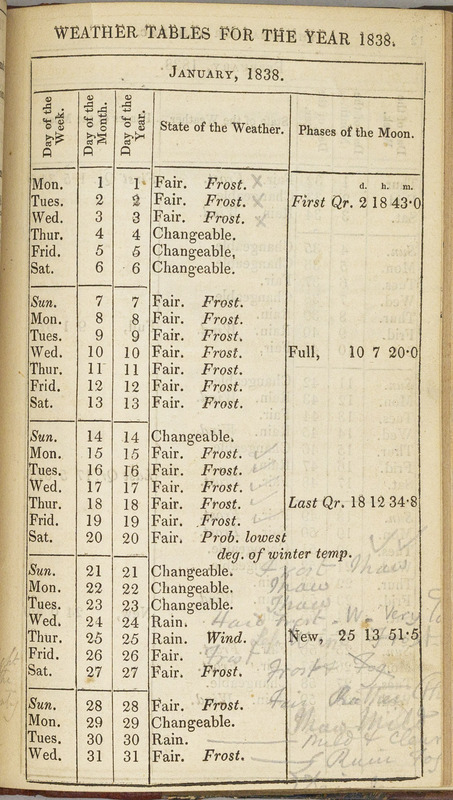
Almanacs were one of the biggest mass market products of their time. They are annual publications with information on subjects of daily use to their readers. In 1838 Murphy’s Weather Almanac correctly predicted that the coldest day of the year would fall on 20 January, which made its sales sore. An unknown annotator of this copy has checked its predictions for accuracy. Popular almanacs producing accurate knowledge posed a challenge to elite scientific meteorologists at the time.
This bust forms part of one of the world's largest collections of shorthand material, and is eloquent testimony to the passion of shorthand enthusiasts. Pitman was the inventor of the world's most widely adopted shorthand system.
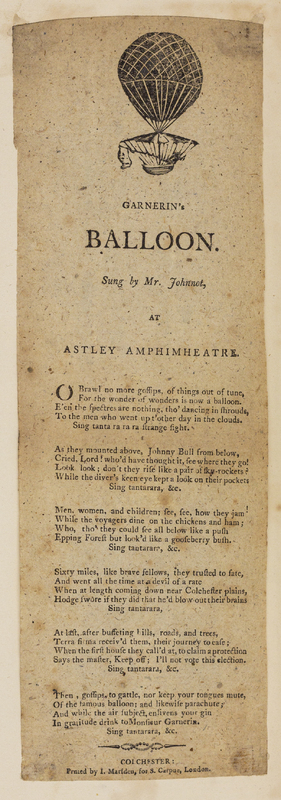
GARNERIN's BALLOON. Sung by Mr. Johnnot, AT ASTLEY AMPHIMHEATRE. of For the wonder of wonders is now a balloon. E'en the fpectres are nothing, tho' dancing in fhrouds, To the men who went up t'other day in the clouds. Sing tanta ra ra ra ftrange fight. As they mounted above, Johnny Bull from below, Cried, Lord! who'd have thought it, fee where they go! Look look; don't they rife like a pair of fky-rockets? While the diver's keen eye kept a look on their pockets Sing tantarara, &cc. Men, women, and children; fee, fee, how they jam While the voyagers dine on the chickens and ham; Who, tho they could fee all below like a pufh Epping Foreft but look'd like a goofeberry bufh.- Sing tantarare, &c. Sixty miles, like brave fellows, they trufted to fate, And went all the time at a devil of a rate When at length coming down near Colchefter plains, Hodge fwore if they did that he'd blow out their brains Sing tantarara, At laft, after buffeting hills, roads, and trees, Terra firma receiv'd them, their journey to eafe; When the first houfe they call'd at, to claim a protection Says the maſter, Keep off; I'll not vote this election. Sing tantarara, &c, Then, goffips, to gattle, nor keep your tongues mute, Of the famous balloon; and likewife parachute; And while the air fubject, enlivens your gin In gratitude drink to Monfieur Garnerin. Sing tantarara, &c. CHIL COLCHESTER: Prated by I. Mariden, for S. Carpue, London.
On Wednesday 26 November 1703, Daniel Defoe nearly died near his London home when part of a neighbouring house collapsed in a week-long hurricane that hit the south of England and the English Channel. Regarded as the first substantial work of modern journalism, he published this book the following year, after advertising in the London Gazette for eyewitness accounts. In sharp contrast to ‘clinical’ colonial reports of weather disasters, Defoe foregrounds stories of courage, selfishness and suffering by those who experienced the Great Storm.
Assyrian cuneiform inscription stamped on a brick dedicated to Ishme-Dagan, fourth king in the First Dynasty of Isin. c. 1960 BC. Presented by the Central Library of Chelmsford in 1954.