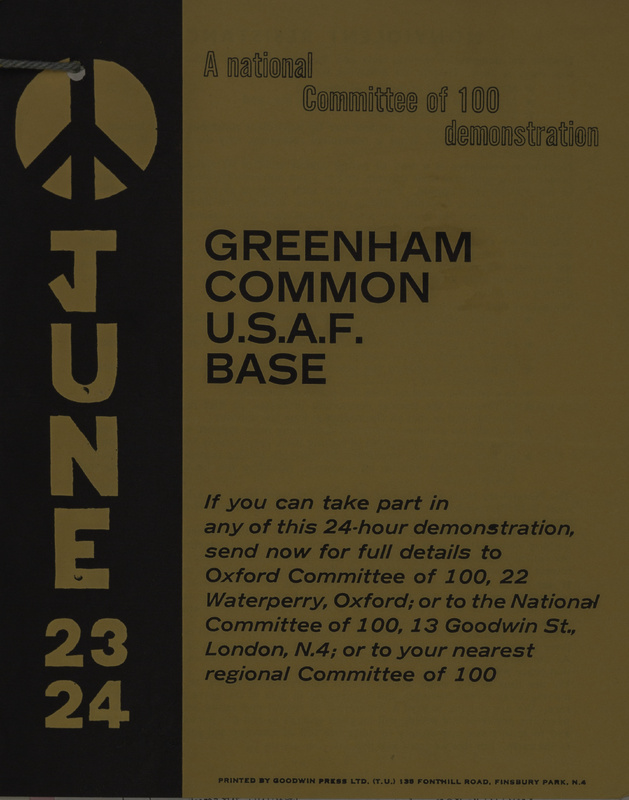
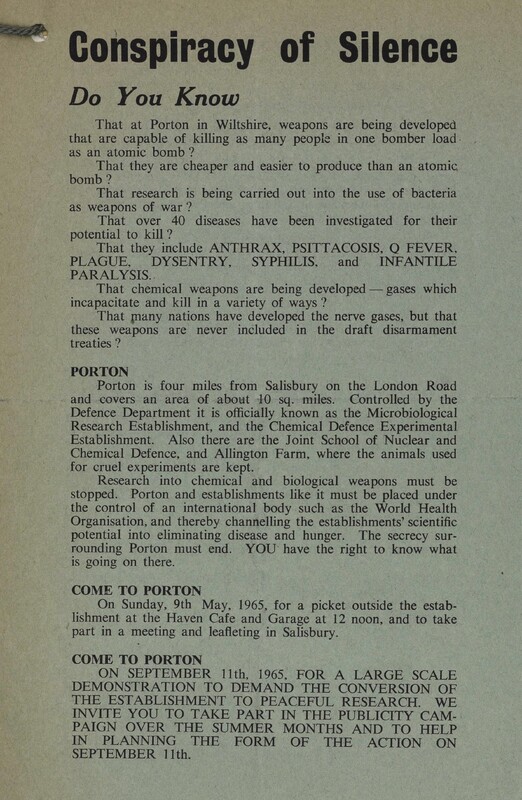
1961-1965. File title, "Committee of 100 incl. Industrial Sub. Cttee. “Voice of N.D.”. Includes papers of London Committee of 100, leaflets and reports about protests and demonstrations. Legal and general briefings for those taking part in non-violent demonstrations, civil disobedience, direct action. Requests for support at Old Bailey trials of protesters. Questionnaire for Committee of 100 Survey.
1961-1965. File title, "Committee of 100 incl. Industrial Sub. Cttee. “Voice of N.D.”. Includes papers of London Committee of 100, leaflets and reports about protests and demonstrations. Legal and general briefings for those taking part in non-violent demonstrations, civil disobedience, direct action. Requests for support at Old Bailey trials of protesters. Questionnaire for Committee of 100 Survey.
1961-1965. File title, "Committee of 100 incl. Industrial Sub. Cttee. “Voice of N.D.”. Includes papers of London Committee of 100, leaflets and reports about protests and demonstrations. Legal and general briefings for those taking part in non-violent demonstrations, civil disobedience, direct action. Requests for support at Old Bailey trials of protesters. Questionnaire for Committee of 100 Survey.
1961-1965. File title, "Committee of 100 incl. Industrial Sub. Cttee. “Voice of N.D.”. Includes papers of London Committee of 100, leaflets and reports about protests and demonstrations. Legal and general briefings for those taking part in non-violent demonstrations, civil disobedience, direct action. Requests for support at Old Bailey trials of protesters. Questionnaire for Committee of 100 Survey.
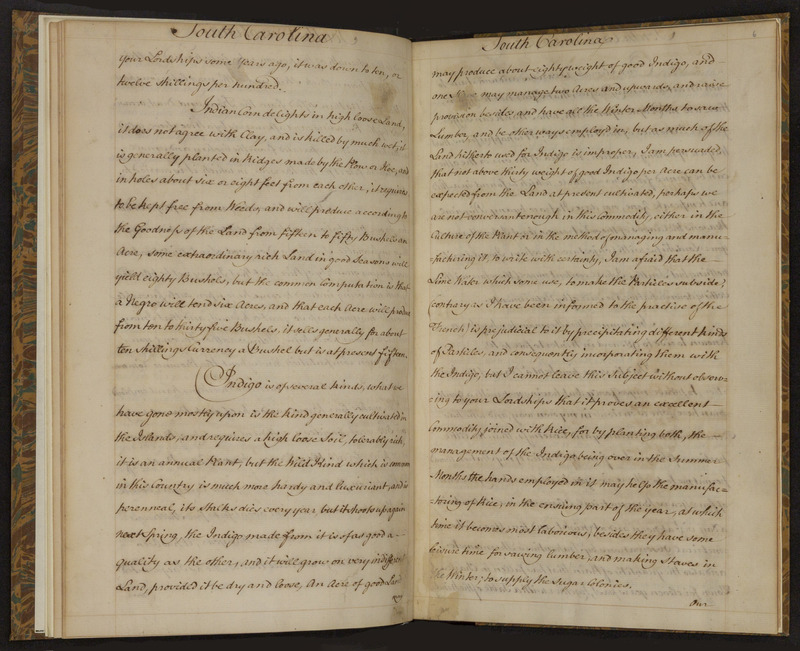
British colonial administrators’ reports reveal the relationship between climate, the empire’s economy and enslavement. Here the Governor of South Carolina, James Glen, reports to the Crown’s official organisation monitoring trade in the British colonies’ plantations. He describes indigo and rice as “excellent” export commodities due to the region’s subtropical climate and highlights how these valuable crops are managed to exploit enslaved labourers across seasons in both the American and Caribbean colonies.
This handmade booklet contains a small specimen of cloth from the 'unwrapping' of a mummy held at UCL in 1889. It belonged to Reginald Arthur Rye, University Librarian and a keen Egyptologist, and was collected for him by his father. The mummy in question was later destroyed by bombing in WW2
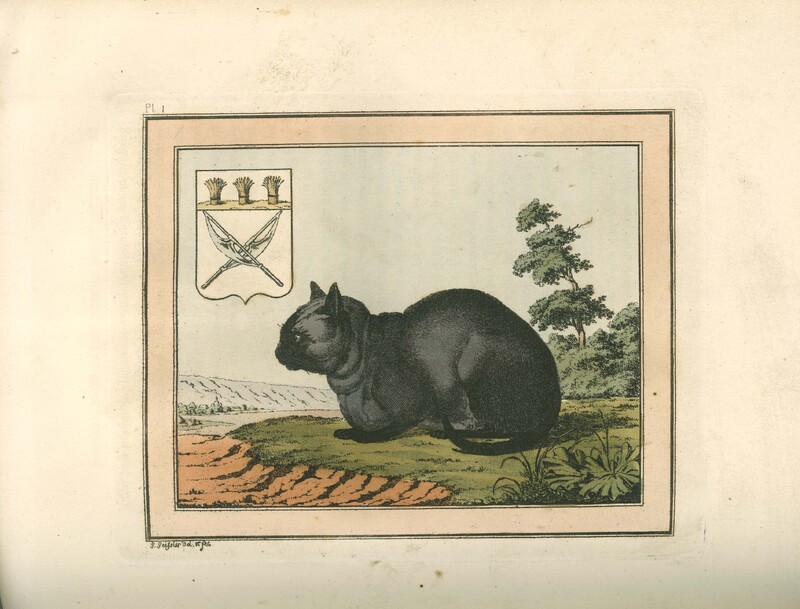
Plate from Travels through the southern provinces of the Russian empire, in the years 1793 and 1794 translated from the German of P.S. Pallas, Vol. 1. In the M.S. Anderson Collection, writings on Russia printed 1525-1917. 'Represents a peculiar species of the domestic Cat' (page ix). A black cat Siamese hybrid perhaps?
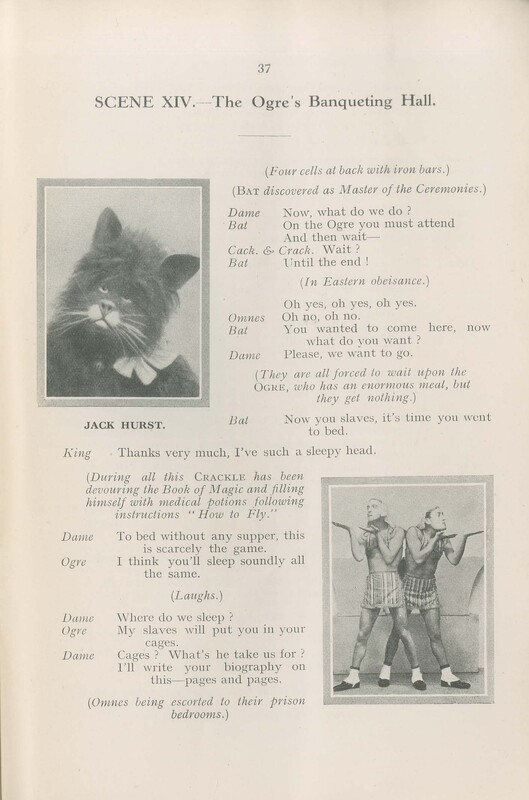
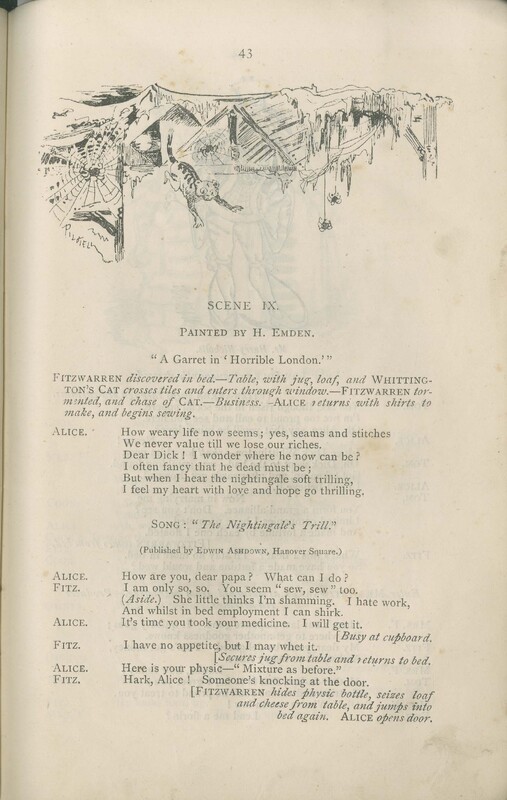
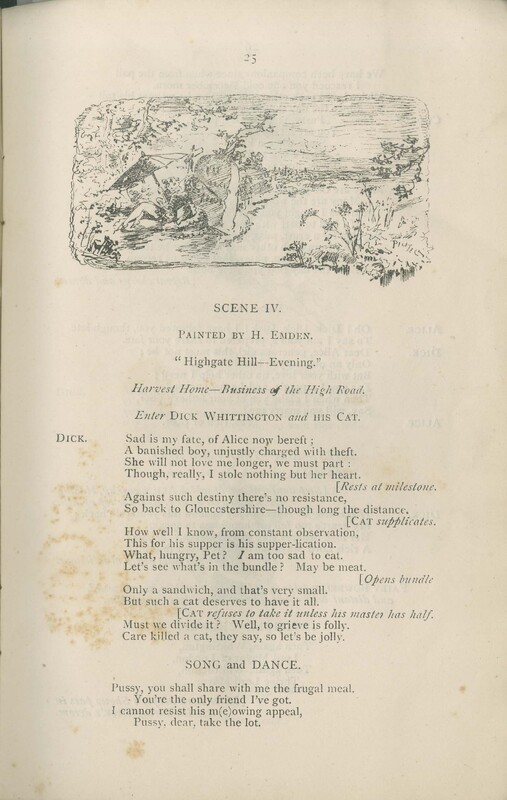
Page from Book of the words of Whittington and his cat : the Drury Lane pantomime, 1884-5. In the Malcolm Morley Collection on 19th and 20th century theatre.
Page from Book of the words of Whittington and his cat : the Drury Lane pantomime, 1884-5. In the Malcolm Morley Collection on 19th and 20th century theatre.
Murphy's weather almanac : a farce / by William Rogers, esq., comedian. ImprintLondon : Published for the proprietor by W. Strange, 1838. Descript.24 p. : ill. ; 15 cm. Malcolm Morley 2947 Collection MURPHY'S WEATHER ALMANAC. A FARCE, In One Act, lomedian BY WILLIAM ROGERS, ESQ., COMEDIAN. Author of " Cyril Woodbine," " Virgirius the Rum-un," &c. &c. PRINTED FROM THE ACTING COPY, WITH DESCRIPTION OF THE COSTUME, CAST OF THE CHARACTERS, EXITS AND ENTRANCES, AND THE WHOLE OF THE BUSINESS. AS PERFORMED AT SADLER'S WELLS THEATRE. 197b1838 WITH A CORRECT ILLUSTRATION OF PRINCIPAL SCENES. ONE OF THE J.FINDLAY. London: Published for the Proprietor by W. STRANGE, 21, PATERNOSTER ROw. MURPHY'S WEATHER ALMANAC. TURNER AND FISHER, NEW YORK AND PHILADELPHIA, UNITED STATES. Pat. Here ould Max-ould Max o-de-milion, come in. I say-here's news for you 1838 Here, sir, here are your spoons, and jug, and there's the thiei. SCENE Enter Maximilian, East, & Charlette.
Goethe had a keen interest in studying nature and his studies inspired his poetry. He admired Luke Howard’s work for “bestowing form on the formless” and “creating a system of ordered change on a boundless world”. Several of his poems are dedicated to Howard’s cloud classification and one is even written in Howard’s honour (Howards Ehrengedächtnis). The two men also corresponded with each other. Howard sent Goethe a copy of The Climate of London in 1822.
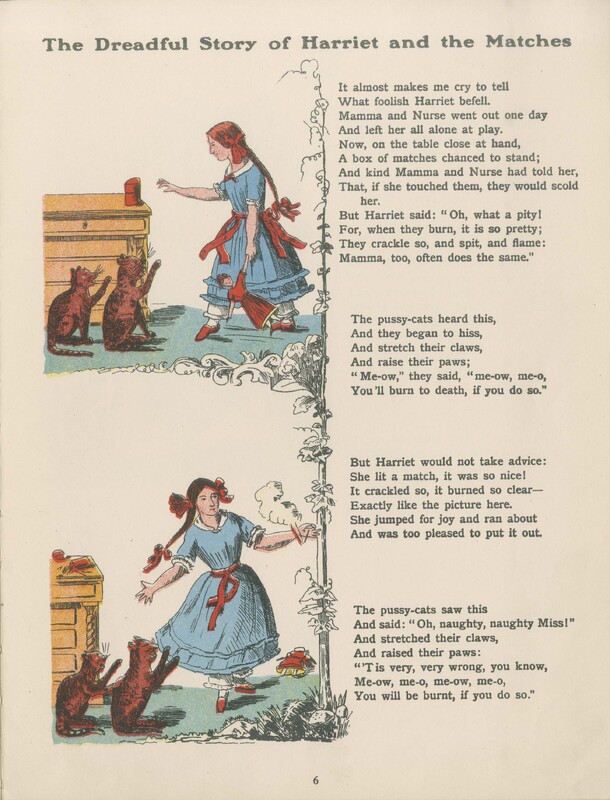
Page from Struwwelpeter; or, Merry stories and funny pictures [by Heinrich Hoffmann]. In the Special Collections K10, children's educational books. Illustrations from the 1861 German edition, possibly embellished by Hoffmann from the original 1845 edition.
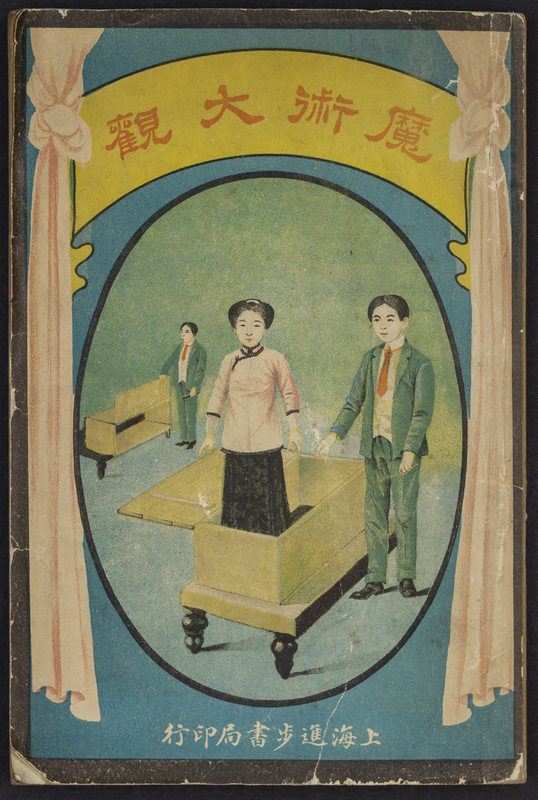
This book (Translated title: The devil's art from top to bottom: Exhaustive Exposé of Magic) features many tricks from western conjuring manuals including magic lanterns, optical illusions, trick tables, the Sphinx, the Cabinet of Proteus and handkerchief and coin magic. The cover shows a trunk transposition, with the female performer being locked in one trunk and then appearing from another.
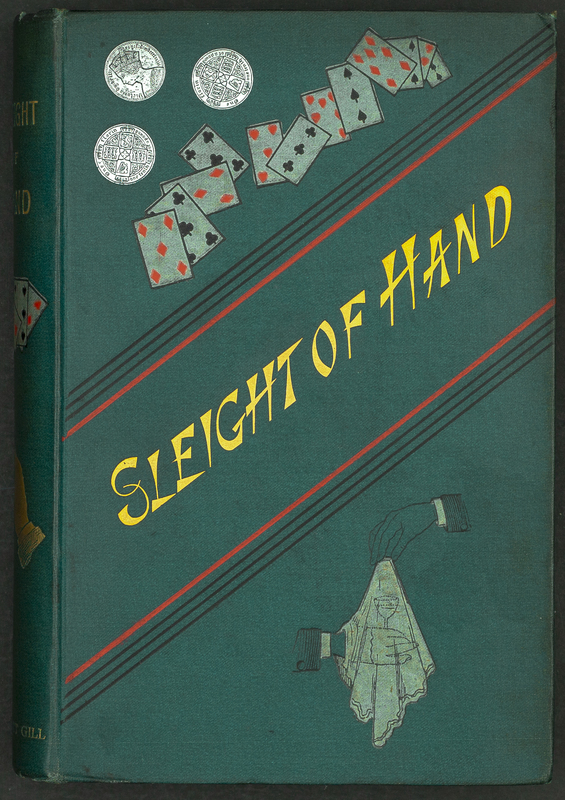
This book from the Harry Price Library describes the skills required for sleights and misdirection used in drawing room magic, the performance space of most amateur magicians, and in ‘grand magic’ for the stage. It began as a series of articles in the Bazaar Exchange and Mart before being collected in a book in 1877.
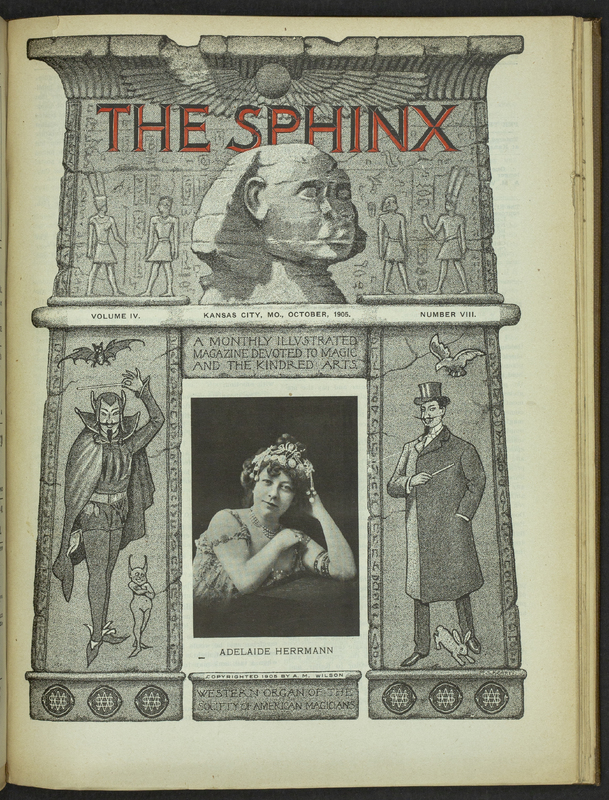
Women in magic are often in a minority and overlooked. Adelaide Herrmann, known as the Queen of Magic across America, was renowned for her version of the bullet catch trick and skill with billiard balls. She featured often in the magical and popular press and appears here on the cover of The Sphinx.
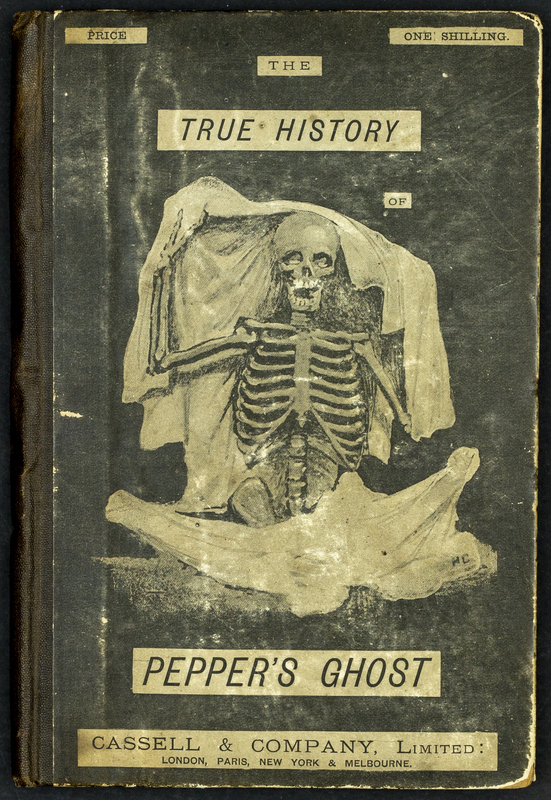
Pepper’s Ghost was a sensation of the Victorian age: an optical illusion that produced the image of a ghost onstage through a combination of light and reflections through glass. Attributed to Henry Dircks, the invention showed the usefulness of glass in creating stage illusions. This book tells the story of the full history of the effect's origin and development.
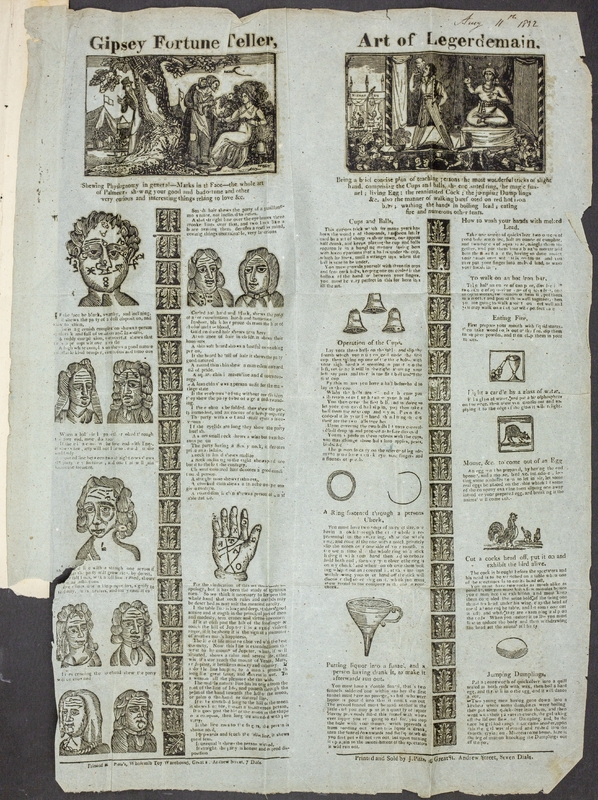
Printed on one side of a single sheet, this article gives concise instructions in learning the arts of conjuring, including the cups and balls, decapitating and reviving a cockerel, and stunts such as walking on hot iron bars and fire-eating. Broadsides or broadsheets were produced as cheaply as possible as forms of mass entertainment, as such they were ephemeral and can be incredibly rare. It was printed with the Gypsey Fortune Teller, revealing the secrets of physiognomy and palmistry.
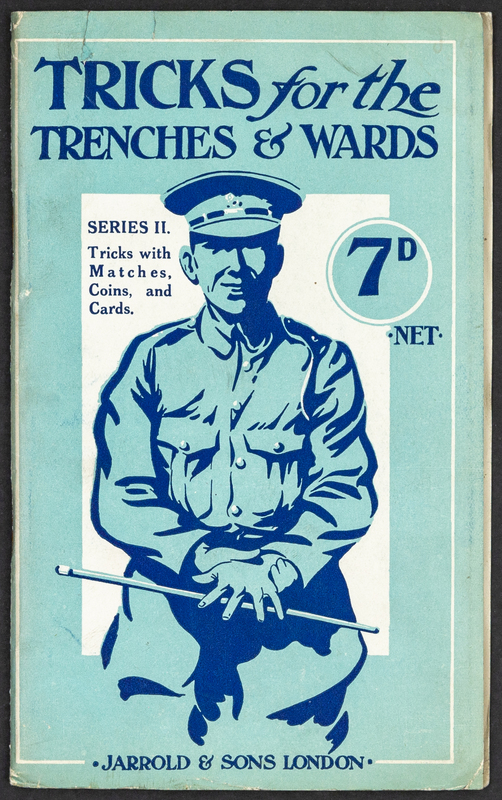
Written by Charles Folkard, professional magician and illustrator, under the pseudonym Draklof, this was a popular series of two pamphlets containing simple tricks with basic props, such as matches and coins that could be mastered easily and performed by a nurse or soldier.
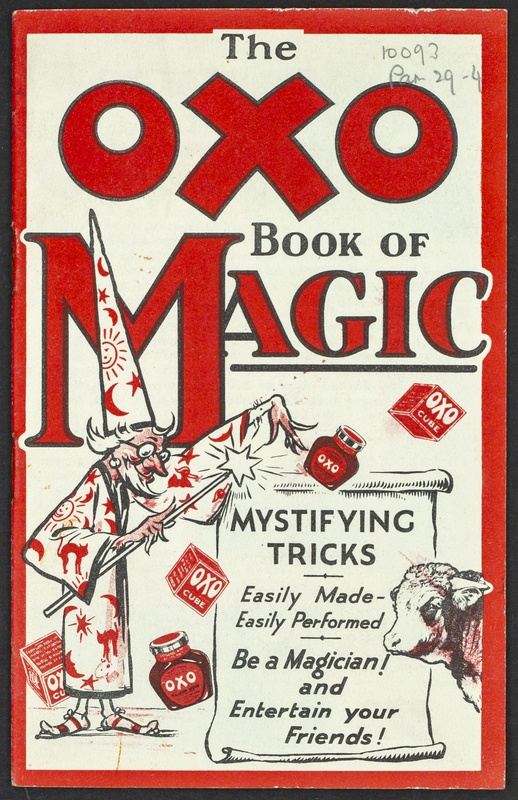
This small pamphlet re-purposes simple, classic tricks for use with Oxo products and packaging - an example of using magic for advertising and promotion. It was sent to several magic magazines and received positive mentions, for the potential of its wide distribution to stimulate interest in magic and as an advertising gimmick.
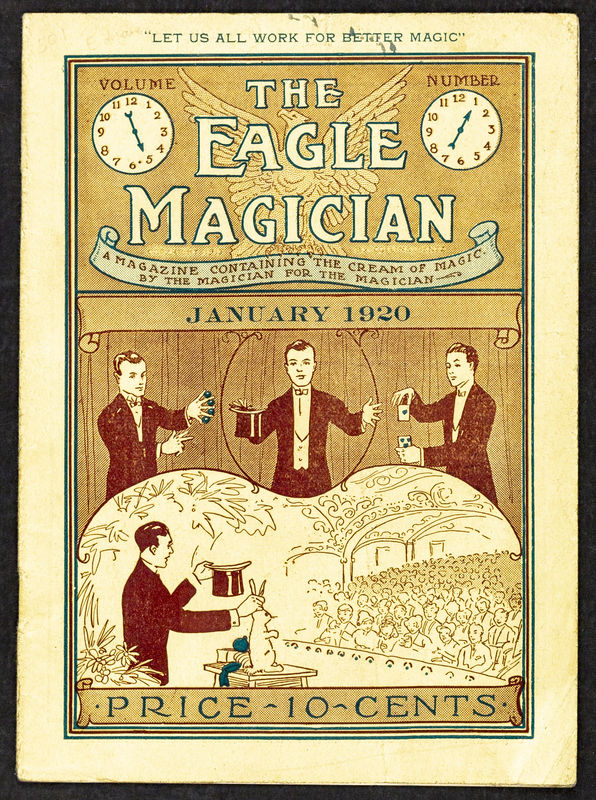
This periodical was published between 1915 and 1922 by Collins Pentz in Minnesota. Pentz started in magic as a dealer and inventor of magic effects, establishing a mail order company in 1896 before creating the Eagle Magic Factory in 1901, as well as organising several magic clubs. The journal covered tricks and advice for professional and amateur magicians.
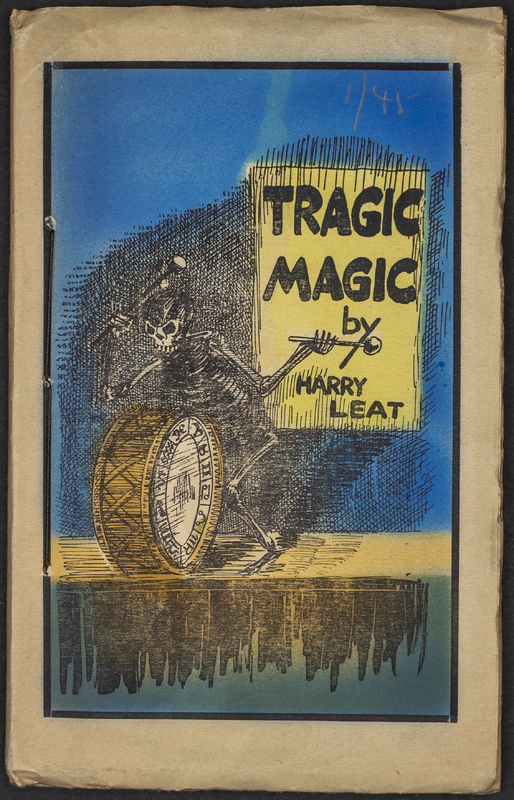
This pamphlet of magical miscellany uses some interesting imagery on its wrappers. Skeletons are commonly used in magic, but the combination with a drum, bearing symbols similar to those used in the Magic Circle logo, conjures up ideas of mortality and death. Harry Leat was an author and dealer of magic books and equipment. He was also known for his outspoken criticism of some of his colleagues, which is included in this book.
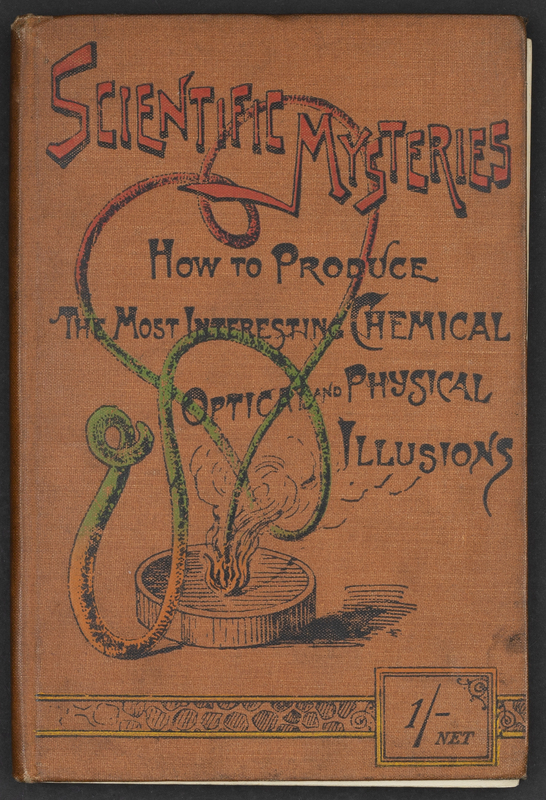
A later book that combines magic and scientific experiments. Experiments with gases, phosphorus, metals, crystallisation and even ‘nihilist bombs’ are alongside invisible inks, inexhaustible bottles, colour changing flowers and the diving imp, often featured in early conjuring books. Important optical illusions of 19th century theatre are also present: stage ghosts, a version of Pepper’s ghost using glass to reflect an actor's image onto the stage and ‘decapitation no murder’.