
The Farther Adventures of Robinson Crusoe
- Title
- The Farther Adventures of Robinson Crusoe
- Heading
- The Novel
- Description
-
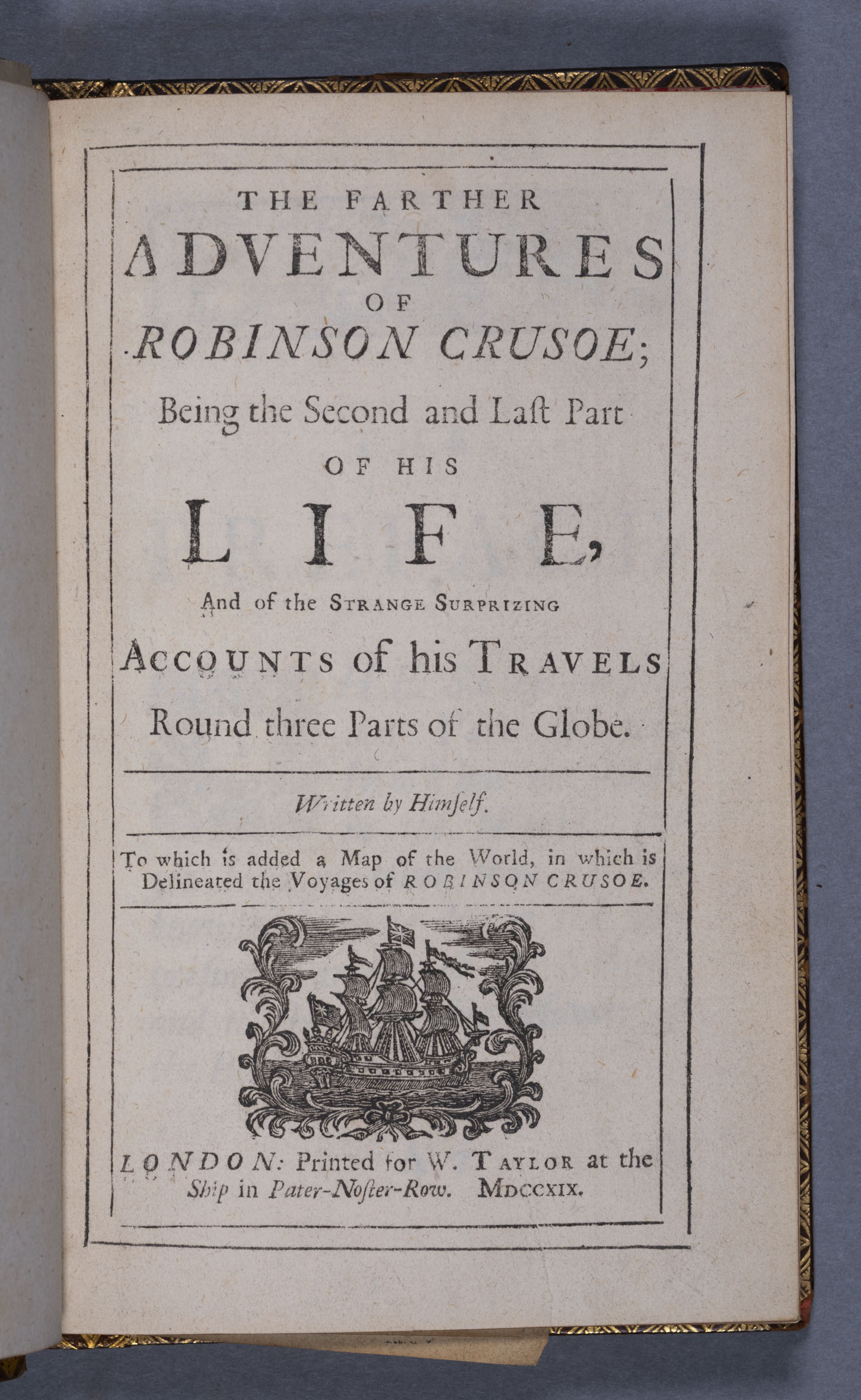
Caxton printed a number of entertaining works, even when he badged them as educational. These include romances like Geoffroy de la Tour-Landry’s The Knight of the Tower and the Four Sons of Aymon alongside works by Chaucer, John Lydgate, and Thomas Hoccleve. Had novels existed in the fifteenth century, Caxton would certainly have printed them. However, the genre of novels developed only much later. The first novel is generally thought to be Miguel de Cervantes’ Don Quixote (1605-1615; translated into English 1612-1620). Robinson Crusoe (1719) is one of the contenders for the status of being the first native English novel.
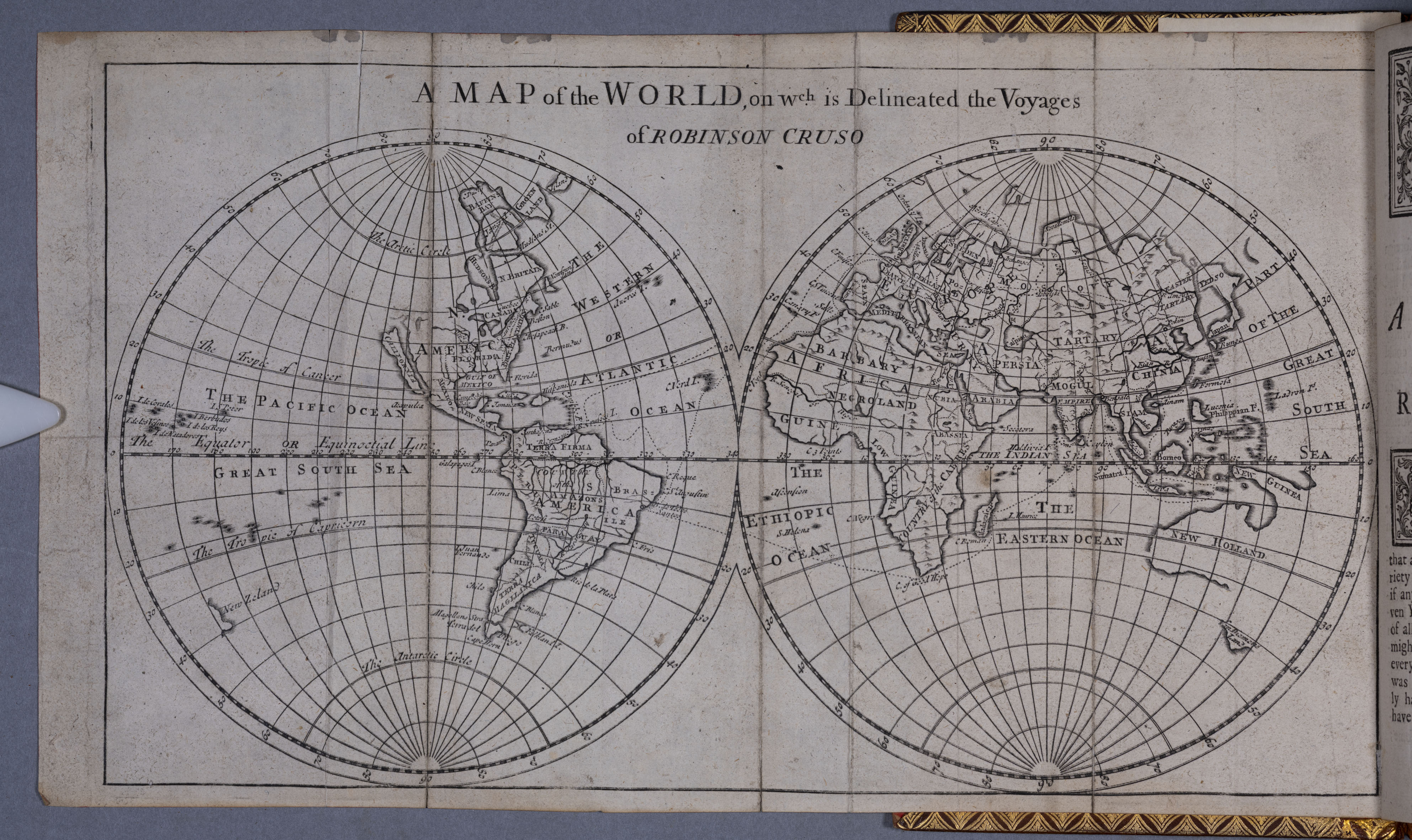
The Farther Adventures of Robinson Crusoe (also 1719) is shown here both as an example of a genre which postdates Caxton and for its demonstration of typographical features unknown to Caxton. The map facing the first page is engraved. Engraving as a form of illustration, albeit known on the Continent in the fifteenth century, did not become widespread until the mid-sixteenth century. The earliest English book to contain an engraving is John Stanbridge’s Accidence, printed by Richard Pynson in about 1505, and English printers relied almost entirely on woodcuts for their illustrations until about 1535. Specially designed decorative headpieces marking the beginning of sections of a work, as here, first appeared in about 1570. While Caxton used decorative printed initials in his edition of Malory’s Arthuriad in 1485, the factotum initial (a standard piece of type in a decorative surround) did not enter print in England until about 1551. - Author
- Daniel Defoe
- Place of Publication
- London
- Publisher
- W. Taylor
- Date of Publication
- 1719
- Format
- 8vo
- Century
- 18th
- Illustrations
- Engraving