

The workes of Geffray Chaucer
- Title
- The workes of Geffray Chaucer
- Heading
- Navigating the Text
- Description
-
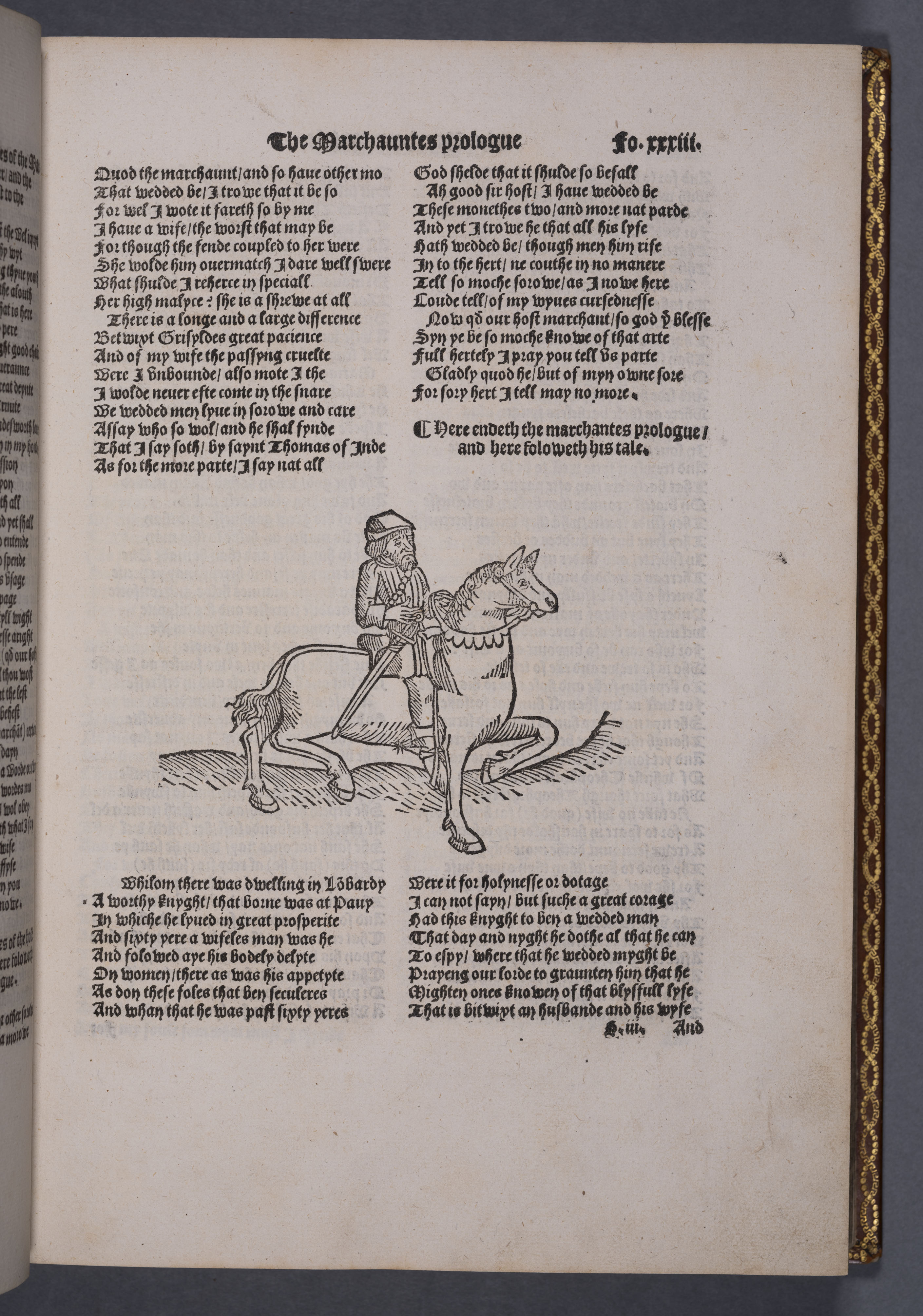
Caxton published several editions of Chaucer’s works: The Canterbury Tales twice (about 1476-77 and 1483), and Chaucer’s Boethius, The Parlement of Foules, The Book of Fame, Troilus and Criseyde, and Queen Anelida and the False Arcite once each. He thereby helped to promote English language and literature and set Chaucer on the way to becoming the ‘father of English poetry’. Not until 1532, however, did a collected edition of Chaucer’s output appear. This edition by William Thynne (d. 1546) distances itself from Caxton’s text, deploring Caxton’s ‘many errours, falsities and deprauacions’ and emending the language. Thynne adds some Chaucerian pieces not printed before and adds a biography and genealogy of Chaucer.
Elements of the layout – running title, foliation, catchword, and signatures – show how books developed to help printers, binders and readers to navigate them. This book is foliated (that is, each leaf is numbered). It has a running title at the top of each page, a catchword (the first syllable or word of the following page) at the bottom, and signatures indicating how the sheets making up the book were put together at the bottom of the first half of each gathering: all features which are to be expected by this time. By contrast, Caxton only ever signed the first leaf of each gathering, and he did not foliate his books. Caxton first used running titles (which existed in twelfth-century manuscripts but appeared spasmodically in early printing) in his Polychronicon of 1482, and used them only in his larger works – admittedly including his second edition of The Canterbury Tales. Both Pynson and Wynkyn de Worde signed books to the centre fold, foliated them, and used running titles. Catchwords did not appear in English books before the sixteenth century. - Author
- Geoffrey Chaucer
- Place of Publication
- London
- Publisher
- Thomas Godfray
- Date of Publication
- 1532
- Format
- Folio
- Century
- 16th
- Illustrations
- Woodcut