

Chronicles of England, Scotland and Ireland
- Title
- Chronicles of England, Scotland and Ireland
- Heading
- Shaping the Nation
- Description
-
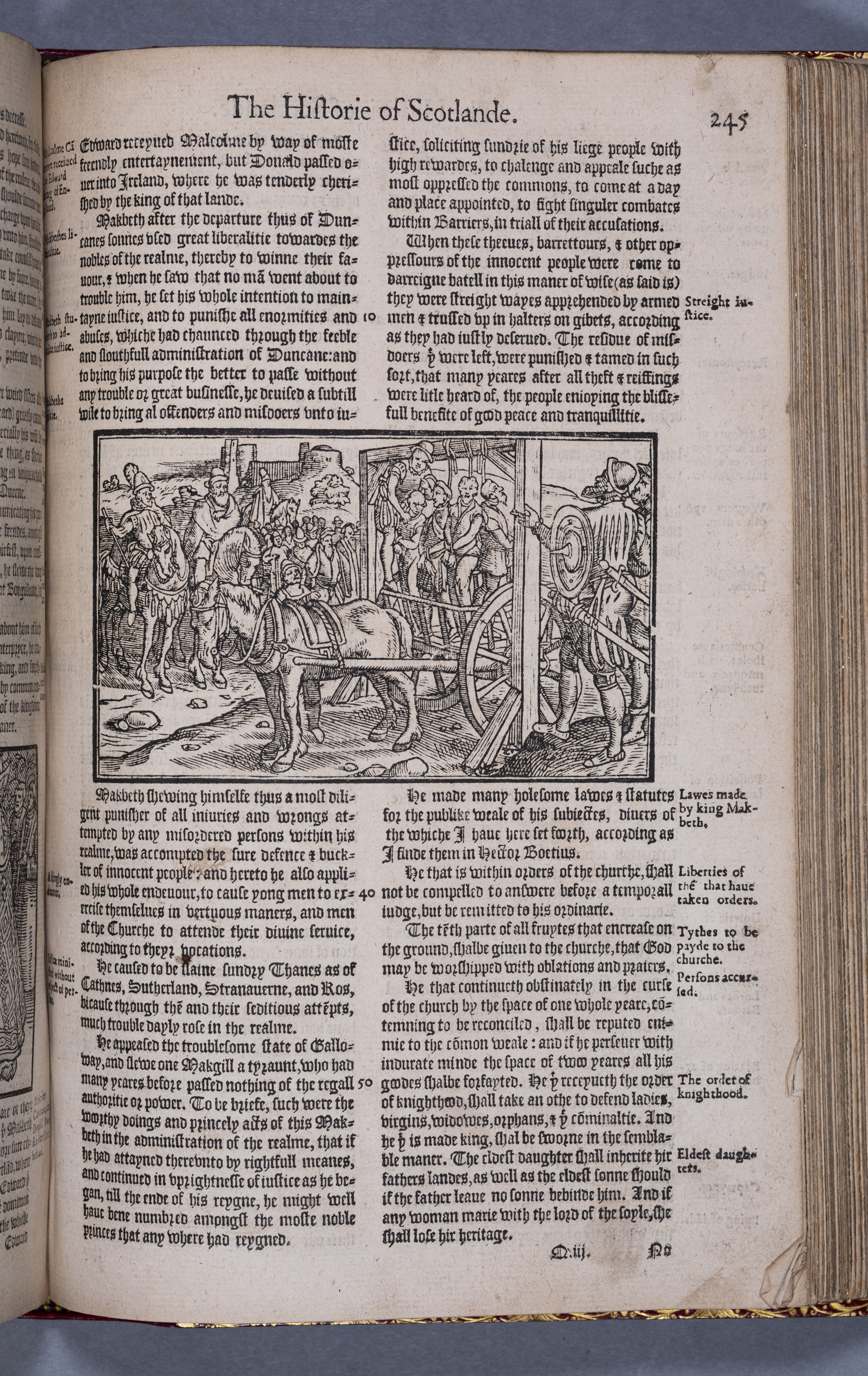
Raphael Holinshed’s Chronicles of England, Scotland and Ireland was one of the most ambitious historical compilations produced in sixteenth-century England. First published in 1577, the work drew together material from chronicles, civic records, earlier printed histories, and eyewitness testimony to create a sweeping account of British history from antiquity to the Tudor present. Its scale and authority made it one of the most influential historical works of the Elizabethan period.
The Chronicles helped shape ideas of English national identity at a moment of religious and political consolidation under Elizabeth I. Although often presented as unmediated historical record, the work reflects assumptions and political values aligned with the Tudor regime, particularly in its treatment of monarchy, rebellion, and providential history. Print gave these narratives a reach and permanence that manuscript chronicles could rarely achieve.
The work also demonstrates the collaborative nature of large-scale printing projects. Holinshed himself acted primarily as compiler and editor, working with other contributors including William Harrison and Richard Stanyhurst, amongst others. The resulting folio volumes were substantial and expensive books aimed at educated and affluent readers. Its influence nevertheless extended far beyond their immediate purchasers. Writers including William Shakespeare drew extensively on the Chronicles for plots, characters, and historical detail. Shakespeare’s Macbeth, King Lear, and several of the history plays all owe significant debts to Holinshed’s narratives. - Author
- Raphael Holinshed
- Place of Publication
- London
- Publisher
- Printed by Henry Bynneman for John Harrison
- Date of Publication
- 1577
- Format
- Folio
- Century
- 16th
- Illustrations
- Woodcut